Veltrixa Veltrixa

10 Best Deep Learning Server Manufacturers for Buyers

Time:2026-11-15 Author:Isabella
0%

Deep learning workloads turn a server into more than a box of processors. The right system must balance GPUs, memory, storage, networking, cooling, and software support. For buyers, those choices affect training time, operating costs, and the room’s power and cooling demands. Small details matter. A rack’s airflow plan can matter as much as a headline GPU count.

AI expert Andrew Ng has described artificial intelligence as “the new electricity.” That comparison helps explain why infrastructure decisions deserve careful attention. A deep learning server manufacturer may offer powerful hardware, but buyers should also examine system integration, configuration options, warranty terms, and technical support. Ask how the system handles sustained workloads, not just short benchmark runs. Check whether power supplies, network adapters, and software stacks match your intended models and deployment environment.

This guide introduces ten manufacturers for buyers comparing deep learning servers. It focuses on practical considerations, including GPU availability, scalability, service coverage, and transparency around specifications. No single vendor is ideal for every lab or enterprise. Some systems may look impressive on paper and still miss a buyer’s needs. That is worth remembering. Before making a decision, confirm current configurations, delivery timelines, and support commitments directly with each supplier. Use the list as a starting point, then compare documented details against your workload, budget, and facility constraints.
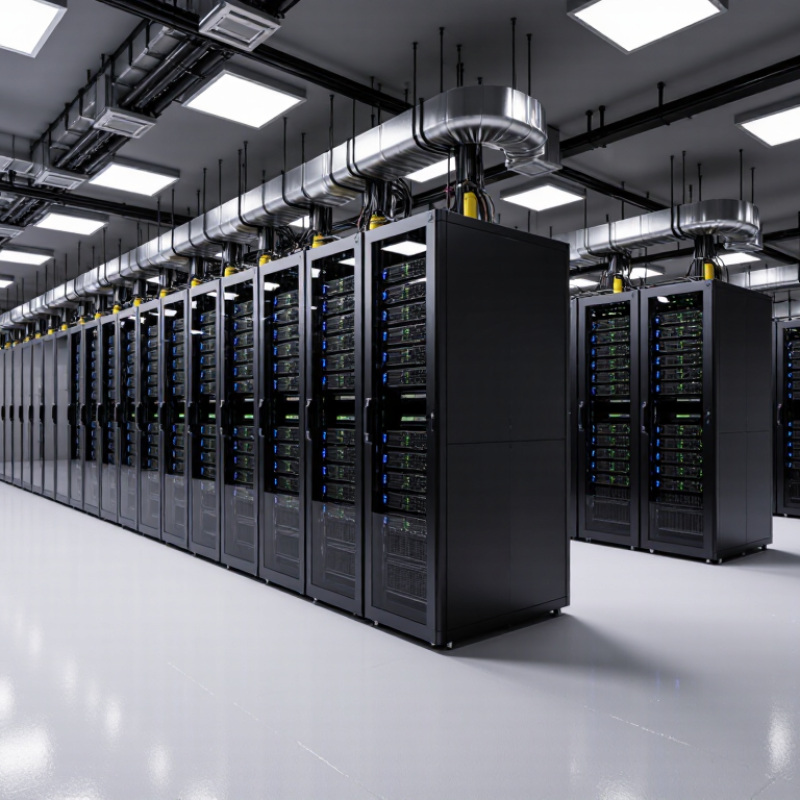
10 Best Deep Learning Server Manufacturers for Buyers

Understanding Deep Learning Servers and Their Core Components

A deep learning server is a balanced system, not simply a box with powerful accelerators. GPUs or other accelerators handle parallel matrix calculations. The CPU coordinates data movement and system tasks, while high-bandwidth memory keeps model weights and active data close to the processors. ECC memory can help detect and correct data errors. Fast local NVMe storage supports datasets and temporary files, but it cannot replace adequate memory.

The Stanford AI Index 2024 reports that training compute for notable AI models has doubled about every five months. That pace makes capacity planning important. Multiple accelerators need suitable interconnects, sufficient power delivery, and cooling that can manage sustained workloads. Network bandwidth also matters when training spans several servers. A fast processor may sit idle if data arrives too slowly. This is easy to overlook. Still, no single configuration fits every model; workload size, precision, and batch size change the requirements.

Tips: Check accelerator memory, power draw, and network capacity against your actual training workload. Ask for measured performance under sustained load, not just peak specifications. Leave room for growth, but avoid buying capacity you cannot keep busy. Estimates are imperfect; revisit them after testing a representative dataset.

Common Deep Learning Numeric Formats

Storage width per value, measured in bits

FP32 uses 32 bits per value; FP16 and BF16 use 16; FP8 and INT8 use 8. Lower storage widths can reduce memory use, but performance and model accuracy depend on the hardware, software, and workload.

Key Criteria for Evaluating Deep Learning Server Manufacturers

When evaluating deep learning server manufacturers, start with the workload, not the headline GPU count. Training large models places different demands on a system than serving smaller models. Check GPU memory capacity, CPU-to-GPU bandwidth, network speed, and storage throughput. A server may have powerful accelerators but still waste time waiting for data. Measure the workload. Ask for benchmark results using comparable model sizes, batch settings, and precision formats.

Cooling and power design deserve close attention. Request thermal test data under sustained load, not just short demonstrations. Look for clear details on airflow, power supplies, rack density, and noise. These affect uptime and facility costs. Small details matter. Also check how easily technicians can replace fans, drives, or accelerator cards. A polished specification sheet does not show whether routine maintenance is simple.

Reliability includes support response times, spare-parts access, firmware updates, and documented troubleshooting. Ask how the manufacturer validates configurations and handles failures during warranty coverage. Compare the full cost of ownership, including electricity, cooling, and service. Peak scores are tempting, and even careful teams can overvalue them. This trade-off is easy to miss. A pilot using your own software and data can reveal bottlenecks that published results overlook. No test is perfect, but a repeatable one is useful.

10 Best Deep Learning Server Manufacturers for Buyers - Key Criteria for Evaluating Deep Learning Server Manufacturers

Use these criteria to compare manufacturers and server configurations. Suitability depends on workload, facility limits, software requirements, and the exact system configuration; this table does not rank or endorse specific manufacturers.

# Evaluation criterion What to verify Why it matters Buyer evidence to request
1 Accelerator compatibility and capacity Supported accelerator models, maximum number per server, memory capacity, slot layout, and validated configurations. Deep learning workloads often depend on accelerator memory and parallel compute capacity. Physical fit and validated support also affect deployment risk. A configuration sheet listing supported accelerators, quantities, memory, and any installation restrictions.
2 GPU-to-GPU and host interconnects Supported high-speed links, peer-to-peer communication, PCI Express generation and lane allocation, and topology documentation. Communication between accelerators can affect multi-device training efficiency. The connection topology varies by server and accelerator configuration. A system block diagram and workload-relevant communication or scaling test results.
3 CPU, memory, and host bandwidth Processor options, memory type and maximum capacity, memory-channel population guidance, and bandwidth available to accelerator workloads. Data preprocessing, orchestration, and feeding accelerators can place significant demands on host processors and system memory. Memory population rules, supported processor configurations, and a bill of materials for the proposed system.
4 Network options and scale-out readiness Available Ethernet or InfiniBand adapters, port speeds, port counts, adapter placement, and compatibility with the intended fabric. Distributed training and shared-data access require suitable networking. Available speeds and configurations depend on the selected components and infrastructure. Adapter specifications, cabling requirements, and confirmation that the server configuration is compatible with the buyer’s network.
5 Storage performance and capacity Drive types, supported drive count, NVMe connectivity, usable capacity, and options for local data or scratch storage. Storage throughput and capacity can affect dataset loading, checkpointing, and local workspace requirements. Drive-bay layout, supported drive list, storage controller details, and any tested workload results.
6 Power delivery and cooling Power-supply capacity and redundancy, input-power requirements, thermal design, cooling type, and operating limits for the configured system. Accelerator servers can impose substantial power and heat loads. Facility capacity and cooling must match the actual configuration. Maximum and typical power estimates, heat-output information, cooling requirements, and facility planning guidance.
7 Chassis, expansion, and serviceability Rack space, weight, expansion slots, drive access, component replacement procedures, and tool-less or front-access service features. Physical constraints determine rack fit, future expansion, maintenance effort, and the practicality of installation. Mechanical drawings, rack-depth and weight specifications, and service documentation.
8 System management and security Remote management functions, hardware monitoring, firmware update processes, access controls, and security documentation. Remote visibility and controlled maintenance help administrators operate systems and respond to faults across a server fleet. Management feature list, supported interfaces, firmware policy, and security advisories or update procedures.
9 Software and workload validation Supported operating systems, driver and firmware compatibility, container or orchestration guidance, and reproducible benchmark methodology. A validated software stack can reduce setup issues. Benchmark results are meaningful only when hardware, software, and test conditions are disclosed. Compatibility matrices, installation documentation, and benchmark reports that identify the tested configuration and method.
10 Warranty, support, and supply planning Warranty coverage, support hours, response options, spare-parts availability, delivery estimates, and configuration change policies. Support quality and parts availability influence downtime risk, while lead times and configuration policies affect deployment schedules. Written service terms, escalation procedures, parts commitments, and a dated delivery estimate for the quoted configuration.

Ten Leading Manufacturers of Deep Learning Servers

Ten leading manufacturers of deep learning servers compete on more than accelerator count. Buyers should examine memory capacity, high-speed networking, storage throughput, and service coverage. A server may look powerful on paper yet struggle with data loading or heat removal. Check the full configuration, not just the headline processor.

The Stanford Institute for Human-Centered AI’s 2024 AI Index reports that training compute for notable AI models has doubled roughly every five months. That pace makes upgrade paths and workload testing important. The International Energy Agency’s Electricity 2024 report projects data-center electricity use could exceed 1,000 terawatt-hours by 2026. Power efficiency and cooling design are therefore practical purchasing criteria, not minor details. Small differences matter.

When comparing manufacturers, request benchmark results for your own model sizes and batch settings. Ask about rack power limits, liquid-cooling readiness, component lead times, and support response targets. These details can reveal trade-offs hidden by polished specifications. One caution: published benchmarks may not reflect your software stack or facility. The comparison is rarely tidy. A careful shortlist should include total operating costs and a realistic deployment test, even when that slows procurement.

Comparing Hardware Options, Support, and Scalability

10 Best Deep Learning Server Manufacturers for Buyers

Comparing Hardware Options, Support, and Scalability

Choosing a deep learning server means balancing accelerator count, memory, power, and cooling. A dense configuration can process large models quickly, but it may need specialized airflow and higher-capacity power feeds. The Stanford AI Index 2024 reports that training compute for notable AI models has doubled roughly every five months. That pace makes upgrade paths important, not just today’s benchmark scores. Check whether a system supports additional accelerators, faster networking, and practical storage expansion.

Support can matter as much as peak performance. Ask about response times, replacement parts, firmware updates, and help diagnosing GPU or network faults. For scalability, compare the cost of adding servers with the cost of expanding one large system. IDC forecast worldwide AI spending would reach $632 billion by 2028, reflecting growing demand for infrastructure. Still, forecast spending does not guarantee that every buyer needs a large cluster. One caveat: workload estimates are often imperfect, and early sizing can be wrong.

Tips: Request a configuration matched to your model, dataset, and expected growth. Confirm power draw under sustained load, not only peak performance. Ask for a clear support plan, too. A low purchase price can become costly downtime.

Matching a Manufacturer to Your Workload and Budget

Choosing a deep learning server manufacturer starts with the workload, not the largest specification sheet. A team training large models may need multiple accelerators, substantial memory, and fast storage. Inference workloads often benefit more from predictable latency, efficient power use, and room for future expansion. Be specific: estimate model size, dataset volume, daily job hours, and expected growth. Small details matter.

Ask manufacturers to explain how they validate thermal performance under sustained load. A server that runs quietly during a short demo may behave differently after hours of training. Request clear configuration options, delivery estimates, warranty terms, and support response times. Compare the full cost, including networking, rack space, electricity, and maintenance—not just the purchase price. Specifications can look tidy on paper. Reality gets noisier.

Budget choices involve trade-offs. A lower-cost system may be sensible for occasional experiments, while production teams may value spare capacity and faster replacement support. Check that components work together and that upgrades will not require a costly rebuild. Ask for test results that reflect your software and workload, where possible. One awkward question helps: what happens when a part fails during a deadline week? A dependable answer is worth weighing alongside the quote.

FAQS

What should I check before choosing a deep learning server?

Start with your workload, not the advertised accelerator count. Compare GPU memory, CPU-to-GPU bandwidth, networking, and storage throughput.

Why should benchmarks match my workload?

Model size, batch settings, and precision can change results. Ask for comparable tests, then run a pilot with your own software and data.

How can I evaluate cooling and power needs?

Request thermal data from sustained workloads. Check airflow, power supplies, rack density, noise, and actual power draw.

What maintenance details should I ask about?

Find out how easily technicians can replace fans, drives, and accelerator cards. Small details matter.

Which support services are worth comparing?

Ask about response times, spare parts, firmware updates, and troubleshooting help. Confirm how configuration failures are handled during warranty coverage.

How do I compare the total cost of ownership?

Include electricity, cooling, and service costs, not just the purchase price. Downtime can make a cheaper system costly.

Should I buy one large system or add several servers?

Compare expansion costs for both options. Check whether you can add accelerators, faster networking, and storage as needs grow.

How certain should my workload estimates be?

Treat early estimates as rough. I might be giving peak scores too much weight. No test is perfect.

Conclusion

Choosing the right deep learning server manufacturer requires more than comparing processor speeds or the number of accelerators. Buyers should first understand how components such as GPUs, CPUs, memory, storage, cooling, and networking work together to support demanding training and inference tasks. When evaluating manufacturers, consider system reliability, configuration flexibility, technical support, warranty coverage, and the ability to expand capacity as workloads grow.

The leading options differ in hardware choices, service levels, scalability, and overall cost. A useful comparison weighs performance against power and cooling requirements, deployment needs, and long-term support rather than focusing on specifications alone. By matching a server configuration to the size of the models, data volume, workload type, and available budget, organizations can select a solution that meets current needs while leaving room for future growth.

Isabella

Isabella

Isabella is a dedicated marketing professional with a sharp focus on driving brand growth and engagement through strategic content creation. With an extensive background in digital marketing, she combines her passion for storytelling with her keen understanding of industry trends to deliver......