 Veltrixa
Veltrixa
Veltrixa
China’s AI server industry has become a critical part of global computing infrastructure. This article examines ten leading companies shaping that market, from established hardware manufacturers to specialized data center solution providers. Each ai server manufacturing company is assessed through practical indicators, including server architecture, GPU integration, production capacity, cooling design, supply chain depth, and after-sales support.
The discussion also considers how these companies serve cloud platforms, research institutions, telecom operators, and enterprise data centers. A modern AI server is more than a powerful processor. It requires high-speed interconnects, stable power delivery, efficient thermal management, and carefully tested firmware. In a typical deployment, racks may operate continuously under heavy workloads, making reliability more important than impressive specifications alone.
Real evidence matters.
Company rankings can change quickly. Export controls, component availability, domestic chip development, and changing customer demand may alter market positions within months. Some manufacturers publish limited technical information, which makes direct comparisons difficult. That limitation deserves attention rather than polished assumptions. The list therefore combines public company information, product documentation, industry reputation, and observable deployment experience where available.
Readers will find a balanced introduction to each manufacturer’s strengths, market focus, and potential weaknesses. The analysis avoids treating scale as proof of technical leadership. A company with strong production capacity may still face software compatibility challenges. Another may offer advanced customization but lack broad international service coverage. These distinctions help buyers, investors, and technology professionals evaluate China’s AI server landscape with greater clarity and realistic expectations.
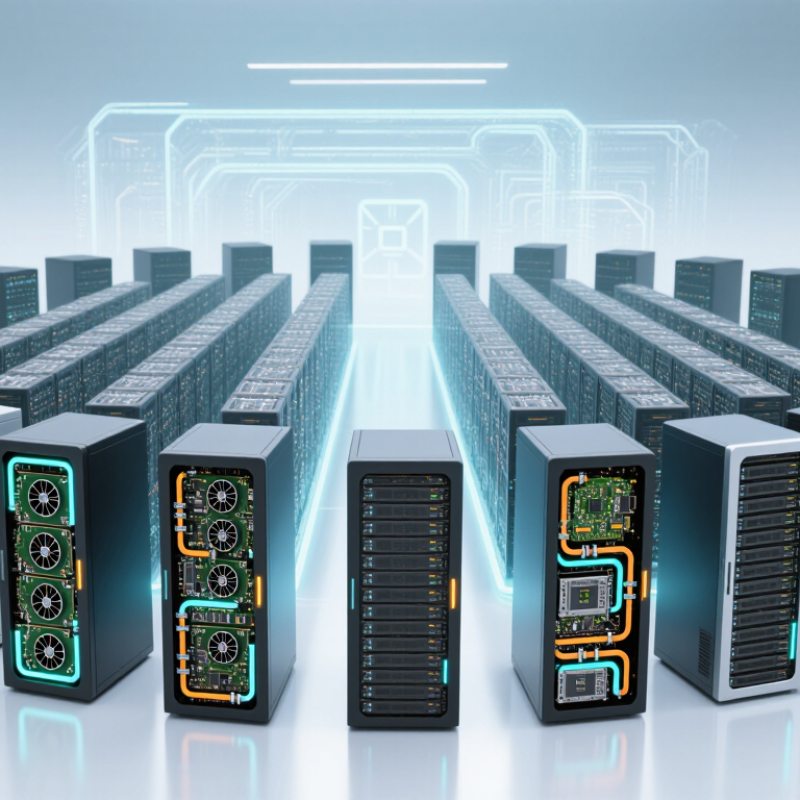
China’s AI server manufacturing industry covers the design, assembly, testing, and delivery of servers built for artificial intelligence workloads. These systems often use accelerated computing units, high-speed memory, advanced networking, and strong cooling structures. They support model training, inference, scientific research, industrial inspection, and public digital services.
The industry’s scope extends beyond the server cabinet. It includes motherboard design, power management, thermal engineering, firmware, chassis production, and system integration. Manufacturers may also provide rack-scale deployment, remote monitoring, maintenance, and energy-efficiency testing. In practical evaluations, I would examine production capacity, component traceability, testing standards, delivery records, and long-term service quality. A polished specification sheet is not enough.
China’s top ten AI server manufacturers should therefore be assessed through clear and comparable criteria. These may include research investment, customization ability, supply-chain resilience, data-center compatibility, and performance under sustained workloads. Factory experience matters. So does after-sales response. A server that performs well in a short demonstration may behave differently after months of heat, dust, and continuous operation. This is where public data can feel incomplete. Some industry rankings also mix original manufacturers with system integrators, making direct comparisons imperfect. The definition should remain practical, evidence-based, and open to revision.
Ten representative manufacturing profiles used to define the competitive scope of China’s AI server industry
| Profile | Manufacturing Category | Primary Product Scope | Typical Accelerator Configuration | Typical Form Factor | Approximate System Power | Cooling Approach | Main End-Use Market |
|---|---|---|---|---|---|---|---|
| 01 | General-Purpose AI Server Manufacturing | Configurable servers for training, inference, virtualization, and enterprise computing | 1–4 accelerator cards or integrated accelerator modules | 1U–4U, 19-inch rack compatible | 1.5–8 kW per server, depending on configuration | Air cooling with high-static-pressure fans | Cloud service providers, enterprises, universities, and research institutes |
| 02 | High-Density AI Training Systems | Multi-accelerator systems designed for large-model training and high-performance computing | 4–8 high-performance accelerators with high-speed interconnects | 4U–8U rack systems | 6–15 kW per server | Advanced air cooling or direct-to-chip liquid cooling | AI laboratories, national research centers, and large-scale data centers |
| 03 | AI Inference Server Manufacturing | Low-latency systems for model serving, recommendation engines, and computer vision | 1–4 inference accelerators or accelerator cards | 1U–2U rack systems | 0.8–4 kW per server | Air cooling; optional liquid-assisted cooling for dense deployments | Internet platforms, financial services, retail, telecommunications, and media |
| 04 | Liquid-Cooled AI Server Manufacturing | High-density computing platforms for facilities with restricted air-cooling capacity | 4–8 accelerators, often with high thermal design power | 4U–8U rack systems or liquid-cooled racks | 8–30 kW per server or substantially higher at rack level | Direct-to-chip cooling, rear-door heat exchangers, or immersion cooling | Hyperscale data centers and high-performance computing facilities |
| 05 | AI Storage and Data-Preparation Systems | High-throughput storage, preprocessing, checkpointing, and dataset management platforms | Optional 1–2 accelerators for preprocessing and compression workloads | 2U–4U storage servers | 0.6–3 kW per server | Air cooling | AI clusters, research institutions, digital-content companies, and enterprises |
| 06 | AI Networking and Cluster Fabric Integration | Network appliances, server interconnects, and rack-scale communication infrastructure | Accelerator-to-accelerator and server-to-server high-speed links | 1U–2U switches and integrated rack systems | 0.3–2 kW per network appliance | Air cooling, with liquid-cooled options for high-density racks | AI training clusters, cloud platforms, and supercomputing centers |
| 07 | Edge AI Server Manufacturing | Compact and ruggedized systems for locations outside centralized data centers | 1–2 low-power accelerators or embedded AI modules | Short-depth 1U–2U, tower, wall-mount, or fanless chassis | 50 W–1.5 kW per system | Passive cooling or compact air cooling | Manufacturing, transportation, energy, retail, healthcare, and smart cities |
| 08 | OEM and ODM AI Server Production | Build-to-order platforms, white-label systems, and customized rack solutions | Configurable from 1 to 8 accelerators | 1U–8U, rack-scale, or customer-specific chassis | 0.5–30 kW per server or system | Air or liquid cooling according to customer specifications | Cloud operators, system integrators, telecom operators, and international distributors |
| 09 | AI Rack-Scale System Integration | Complete racks combining servers, power distribution, networking, cooling, and management software | Multiple 4–8 accelerator nodes per rack | 42U standard racks or customized high-density racks | 20–100+ kW per rack, depending on density and cooling design | Advanced air cooling or facility-level liquid cooling | Hyperscale, government, financial, and scientific-computing deployments |
| 10 | Localized AI Server and Domestic Supply-Chain Manufacturing | Servers designed around locally available processors, accelerators, storage, and networking components | 1–8 domestically sourced or mixed accelerator modules | 1U–8U rack systems and customized platforms | 0.5–15 kW per server | Air cooling or domestically integrated liquid-cooling solutions | Government, education, finance, telecommunications, and industrial computing |
Scope note: The profiles above describe representative segments of China’s AI server manufacturing ecosystem rather than named companies or a verified company ranking. Power, form-factor, and accelerator figures are typical industry ranges that vary by processor generation, system configuration, workload, and cooling design.
It covers server design, assembly, testing, delivery, and system integration. It also includes firmware, power systems, cooling, chassis production, and maintenance.
They support model training, inference, scientific research, industrial inspection, and public digital services. Different workloads require different memory, networking, and cooling choices.
Many systems use accelerator cards, high-speed memory, PCIe connections, and fast Ethernet. Some chassis support eight or more accelerator cards. Liquid cooling is common in dense racks. Air cooling remains easier to maintain.
Compare sustained performance, power efficiency, firmware stability, testing records, and supply consistency. Review factory capacity and long-term service response. Shipment volume alone is not enough.
Continuous training creates substantial heat inside dense server racks. Liquid cooling can support workloads near 30–40 kilowatts per rack. Air cooling may simplify maintenance. However, actual results depend on the site.
Common products include rack servers, liquid-cooled systems, edge appliances, and complete AI clusters. Edge systems place inference closer to factories, hospitals, or transport networks. Deployment needs vary.
Test representative models, data pipelines, accelerator compatibility, memory bandwidth, and failure recovery. Measure real workloads instead of trusting peak specifications. Test it.
A server may perform well during a short demonstration but struggle after months of heat and dust. Cable problems, monitoring gaps, or unstable firmware can create downtime. Published benchmarks may not match every deployment. I may be too cautious, but onsite testing still matters.
China’s AI server manufacturing industry covers the design, assembly, integration, and support of high-performance computing systems built for artificial intelligence workloads. This overview defines the industry’s scope and explains how the top ten companies can be evaluated through criteria such as computing performance, accelerator compatibility, energy efficiency, system reliability, production capacity, software integration, and customer support. Rather than focusing on brand names, it presents the sector through representative manufacturer types and their technical strengths.
These leading manufacturers typically provide rack servers, accelerated computing platforms, storage systems, cooling solutions, and integrated data center infrastructure. Their products support model training, inference, scientific research, smart manufacturing, financial analysis, healthcare, transportation, and public services. Key competitive trends include stronger domestic supply chains, improved high-speed interconnects, liquid cooling, modular design, open software ecosystems, and lower total operating costs. Together, these developments show how an ai server manufacturing company can compete by combining hardware innovation, scalable deployment, application-specific optimization, and dependable lifecycle services.
