Veltrixa Veltrixa

China Top 10 Industrial AI Server Manufacturers

Time:2026-09-24 Author:Aria
0%

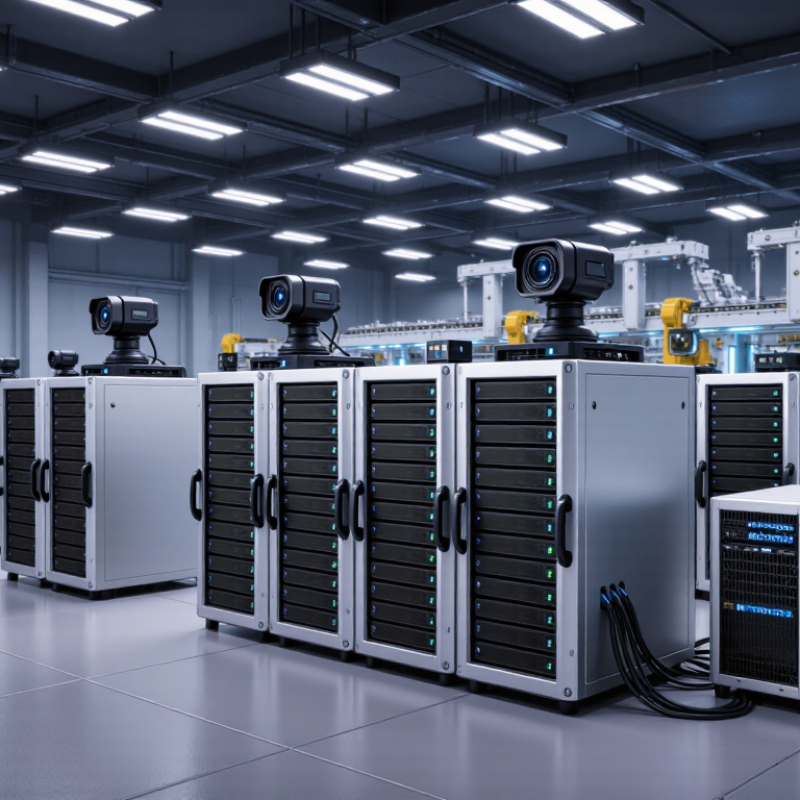
Industrial artificial intelligence is moving from experimental labs into factories, warehouses, energy sites, and transport networks. The shift is visible in server rooms, where rugged systems process camera feeds, sensor readings, digital twins, and predictive maintenance models close to machines.

Gartner forecasts that worldwide AI server revenue will reach about $187 billion in 2024, representing strong year-on-year growth. IDC has also reported rapid expansion in AI infrastructure spending, driven by accelerated computing, high-speed networking, and data-intensive workloads. These figures are useful, but not perfectly comparable. Different reports define AI infrastructure differently. That uncertainty deserves attention.

At the same time, industrial buyers need more than powerful chips. They require thermal stability, extended product lifecycles, cybersecurity controls, remote management, and reliable support in dusty or temperature-sensitive environments. A factory cannot treat an overheated server like a temporary cloud instance. Downtime can stop an entire production line.

NVIDIA founder and CEO Jensen Huang described AI as “the most consequential technology of our time.” His statement reflects the scale of the opportunity, but hardware selection remains practical and local. The right industrial AI server manufacturer must balance GPU performance, energy consumption, system durability, software compatibility, and total operating cost.

This article examines China’s top 10 industrial AI server manufacturers through those criteria. It considers documented capabilities, market presence, engineering experience, and application fit. Rankings are never flawless. Some companies disclose limited industrial data, while others serve broader enterprise markets. Readers should verify specifications, certifications, service coverage, and current pricing before making a procurement decision.

China Top 10 Industrial AI Server Manufacturers

What Are Industrial AI Servers and Why Do They Matter in China?

Industrial AI servers are specialized computing systems built for factories, energy sites, transport hubs, and other demanding environments. Unlike ordinary office servers, they combine powerful processors, AI accelerators, high-speed storage, and industrial-grade protection. They may operate beside production lines, where dust, heat, vibration, and unstable network conditions are common.

In China, these servers matter because manufacturers are connecting more machines to real-time data platforms. A server can inspect product images, predict equipment failures, and adjust production schedules within seconds. It can also process sensitive operational data locally, reducing delays and limiting unnecessary transfers. In practical deployments, engineers must match computing capacity with camera numbers, model complexity, and response-time targets. More power is not always better.

Reliability is equally important. Industrial teams often require redundant power, remote monitoring, long service cycles, and compatibility with existing control systems. Security testing, access control, and documented maintenance procedures should be part of the purchasing decision. Field experience shows that a technically impressive system can still fail when cooling, software updates, or staff training are overlooked. That weakness deserves honest attention. AI accuracy may also decline when factory conditions change, such as new materials, lighting, or machine settings. Continuous testing is necessary, even after installation.

China Top 10 Industrial AI Server Manufacturers - What Are Industrial AI Servers and Why Do They Matter in China?

Industrial AI servers are high-performance computing systems designed to run artificial intelligence workloads such as machine-vision inspection, predictive maintenance, digital twins, robotics, industrial simulation, and real-time production analytics. The table below presents an anonymized comparison of ten representative China-market industrial AI server manufacturer profiles. Company names and brand identifiers are intentionally omitted; specifications are representative configuration ranges commonly used in industrial deployments rather than audited company rankings.

Position Anonymized Manufacturer Profile Typical AI Accelerator Capacity per Server CPU Architecture System Memory Range Local Storage Configuration High-Speed Networking Common Form Factor Primary Industrial Applications Cooling Options Why It Matters in China
1 Profile A: Large-Scale AI Infrastructure Supplier 8 accelerator cards Dual-socket x86 server platform 512 GB–2 TB DDR5 ECC NVMe SSDs with optional enterprise storage expansion 200–400 Gb/s InfiniBand or Ethernet 8U rack server Large-scale computer vision, industrial simulation, autonomous systems training, and digital twins Air cooling; liquid cooling available for high-density deployments Supports centralized AI computing for large factories, research parks, and industrial cloud platforms
2 Profile B: Enterprise AI Server Integrator 4–8 accelerator cards Dual-socket x86 server platform 256 GB–1.5 TB DDR5 ECC NVMe boot drives plus RAID-capable SSD or HDD storage 100–200 Gb/s Ethernet 4U rack server Quality inspection, process optimization, demand forecasting, and predictive maintenance High-efficiency air cooling Offers a balanced solution for medium and large manufacturing enterprises
3 Profile C: Domestic Accelerator Platform Provider 4–8 domestic AI accelerators Domestic or x86-compatible server platform 256 GB–1 TB ECC memory NVMe SSD with optional RAID storage 100–200 Gb/s Ethernet 4U rack server Smart manufacturing, machine vision, industrial natural-language models, and edge-cloud coordination Air cooling; optional liquid-assisted cooling Improves supply-chain resilience and supports localized hardware and software ecosystems
4 Profile D: AI Appliance and Factory Solution Manufacturer 2–4 accelerator cards Single- or dual-socket x86 platform 128–512 GB DDR5 ECC NVMe SSDs with hot-swappable enterprise drives 25–100 Gb/s Ethernet 2U–4U rack server Defect detection, production-line monitoring, worker-safety analytics, and equipment diagnostics Air cooling Reduces deployment complexity for factories that need packaged AI solutions rather than general-purpose clusters
5 Profile E: Industrial Edge Computing Specialist 1–2 accelerator cards Single-socket x86 or ARM-based platform 64–256 GB ECC memory NVMe SSD plus removable industrial storage 10–50 Gb/s Ethernet; industrial Ethernet support 1U–2U rack or rugged edge chassis Real-time inspection, robotics control support, intelligent logistics, and remote equipment monitoring Air cooling; rugged fanless options for selected environments Provides low-latency inference close to production equipment and reduces dependence on remote data centers
6 Profile F: High-Density Computing System Manufacturer 4–8 accelerator cards Dual-socket x86 platform 512 GB–2 TB DDR5 ECC High-speed NVMe array with optional shared-storage connectivity 100–400 Gb/s Ethernet 4U–8U rack server Generative AI fine-tuning, engineering design, digital-twin workloads, and large-scale vision analytics Direct liquid cooling or advanced air cooling Addresses growing demand for dense computing where data-center floor space and power efficiency are constrained
7 Profile G: Manufacturing IT and OT Convergence Provider 1–4 accelerator cards Single- or dual-socket x86 platform 128–768 GB ECC memory RAID-based SSD storage with backup integration 25–100 Gb/s Ethernet 2U–4U rack server MES analytics, supply-chain optimization, production scheduling, and plant-wide monitoring Air cooling Connects enterprise IT systems with operational technology and factory-floor data sources
8 Profile H: AI Training and Inference Cluster Builder 4–8 accelerator cards Dual-socket x86 server platform 256 GB–2 TB DDR5 ECC NVMe SSDs with parallel file-system connectivity 200–400 Gb/s Ethernet or InfiniBand 4U–8U rack server Industrial foundation-model training, multi-site vision systems, simulation, and advanced analytics Air or liquid cooling Enables scalable AI clusters for industrial groups operating multiple factories and production regions
9 Profile I: Rugged Industrial Server Manufacturer 1–2 accelerator cards Industrial x86 or ARM-based platform 32–256 GB ECC memory Industrial NVMe or solid-state storage 1–25 Gb/s Ethernet; optional industrial network interfaces Short-depth rack, wall-mount, or rugged enclosure Mining, energy, transportation, process control, and outdoor machine-vision inference Extended-temperature air cooling or fanless design Improves AI availability in locations with vibration, dust, temperature variation, or limited connectivity
10 Profile J: Cost-Optimized Industrial AI Server Supplier 1–4 accelerator cards Single- or dual-socket x86 platform 64–512 GB ECC memory NVMe SSD with optional SATA storage expansion 10–100 Gb/s Ethernet 2U–4U rack server Small and medium factory inspection, warehouse automation, energy monitoring, and AI-based reporting Air cooling Lowers the entry cost for small and medium-sized manufacturers adopting industrial AI for the first time

Note: Actual performance depends on accelerator type, model size, precision, software optimization, data-preparation pipelines, cooling conditions, and network topology. Industrial AI servers matter in China because they help manufacturers process sensitive production data locally, reduce inference latency, improve equipment utilization, and scale intelligent manufacturing across factories.

Key Technologies Used in China’s Industrial AI Servers

China’s industrial AI servers rely on more than powerful processors. They combine heterogeneous computing, high-speed interconnects, and ruggedized chassis for factory environments. Gartner estimates global AI spending will reach 154 billion dollars in 2024, increasing pressure on manufacturers to improve efficiency, not only performance. In practice, accelerators handle vision inference, while CPUs manage scheduling, safety logic, and database tasks. This split reduces delays beside production lines.

Memory bandwidth is equally important. Large language and vision models move huge datasets between processors and memory. High-bandwidth memory, PCIe 5.0, and liquid cooling can reduce bottlenecks, but they increase system complexity. IDC’s China AI Computing Industry Development report highlights rapid growth in domestic AI computing demand, especially for manufacturing, energy, and transportation. Edge deployment also matters. Servers must process camera feeds locally when network delays could stop a robotic arm. Security modules, encrypted storage, and isolated network zones protect operational data. Yet, some factories still overbuy computing capacity. That creates heat, cost, and unused hardware.

Tips: Check real workload latency before selecting a server. Test vibration, dust protection, thermal stability, and recovery time. Use modular accelerators when models change frequently. Measure power per inference, not just peak performance. Uptime Institute’s 2024 survey continues to show that power and cooling remain major data-center concerns. Industrial sites face harsher conditions, so published laboratory figures may not reflect factory reality. A practical pilot often reveals uncomfortable weaknesses.

China Top 10 Industrial AI Server Manufacturers - Key Technologies Used in China’s Industrial AI Servers

Reference comparison of peak bandwidths used by major technology layers in industrial AI server architectures. The figures are technology-level specifications, not company or brand data.

PCIe values represent approximate bidirectional effective bandwidth per x16 link; Ethernet values are nominal network rates converted to GB/s; HBM values are representative peak stack bandwidths. Actual server performance depends on system configuration, workload, software, and cooling design.

Selection Criteria for Evaluating Industrial AI Server Manufacturers

China Top 10 Industrial AI Server Manufacturers

Selecting industrial AI server manufacturers requires more than comparing processor counts. Evaluate performance under real factory workloads, including machine-vision streams, sensor fusion, and predictive maintenance models. MLCommons benchmark reports show that inference results vary significantly with batch size, latency targets, and software optimization. A higher score is not automatically better. Buyers should request test data using their own cameras, operating temperatures, and response limits.

Power efficiency deserves equal attention. The International Energy Agency reported that data centers consumed about 460 TWh globally in 2022, with demand potentially exceeding 1,000 TWh by 2026. Industrial servers should provide measurable performance per watt, not only peak computing speed. Check thermal design, fan replacement intervals, power-supply redundancy, and operation during voltage fluctuations. Small details matter. A dusty production floor exposes weak cooling designs quickly.

Reliability must include the full service lifecycle. Uptime Institute surveys consistently identify power, cooling, and human error as major causes of data-center incidents. Therefore, assess remote diagnostics, spare-parts availability, firmware controls, cybersecurity processes, and repair response times. Evidence should include documented failure rates, burn-in procedures, and long-term support commitments. Certifications help, but they cannot replace site testing. This is where evaluations often become imperfect: laboratory results may not reflect vibration, dust, or intermittent network loss. A practical selection process should score those risks openly, even when the final ranking becomes less convenient.

China’s Top 10 Industrial AI Server Manufacturers

China’s Top 10 Industrial AI Server Manufacturers

China’s top industrial AI server manufacturers are competing through computing density, thermal control, and factory reliability. Gartner estimated global AI server revenue would reach 158.6 billion US dollars in 2024. TrendForce also forecast AI server shipments to grow about 41% that year. These figures explain China’s expanding supplier base. However, factory buyers need more than processing speed. They should examine GPU availability, power efficiency, network latency, and long-term maintenance support.

In practical evaluations, a strong industrial server should handle dust, vibration, and continuous workloads. Its chassis should leave clear airflow paths around accelerators. Remote monitoring is valuable when a production line operates overnight. IDC research on China’s AI infrastructure market highlights rising demand for localized computing, especially in manufacturing, logistics, and energy.

Yet rankings can change quickly. A manufacturer with impressive benchmark scores may still struggle with spare parts or software compatibility. This is where many comparisons remain incomplete. Real deployment records deserve greater weight than promotional specifications.

Tips: Compare performance per kilowatt, not performance alone. Request thermal test results, service response times, and failure-rate data. Check whether the system supports your existing sensors and industrial networks. A short pilot project can reveal hidden integration costs before large-scale purchasing.

Industry Applications and Market Trends of Industrial AI Servers

Industrial AI servers are moving from laboratory pilots into factories, warehouses, energy sites, and transport networks. Their strongest value appears where data must be processed near machines. A production line can inspect metal surfaces within milliseconds. A warehouse can adjust robot routes without sending every camera frame to the cloud. Energy operators can detect unusual vibration before equipment fails. These workloads require strong computing capacity, stable cooling, and reliable operation around the clock.

Market demand is shifting toward edge deployment, lower power use, and modular system design. Industrial buyers now examine inference speed, operating temperature, expansion options, and long-term maintenance. Cybersecurity also matters because servers may connect with cameras, sensors, control systems, and private networks. In real projects, performance figures alone can mislead. Dust, vibration, outdated software, and weak network coverage often reduce expected results. That lesson is easy to overlook.

Tips: Test servers with real factory data, not only benchmark samples. Measure response time during peak workloads. Check thermal behavior in dusty environments. Confirm spare-part access and technician support. Keep human review for safety-related decisions. AI can assist skilled workers, but it should not replace practical judgment too quickly. Implementation is rarely perfect. Continuous monitoring, documented errors, and regular model updates create more dependable industrial outcomes.

FAQS

What makes an industrial AI server different from a standard server?

It combines accelerators, CPUs, fast memory, and rugged protection for factory conditions. A dusty floor is unforgiving.

Why do industrial AI servers use both accelerators and CPUs?

Accelerators process camera images quickly. CPUs handle scheduling, databases, control logic, and safety-related tasks.

When is edge deployment useful in a factory?

Edge servers process data near machines, reducing network delays. This matters when a robotic arm needs a rapid response.

Which hardware features help reduce processing bottlenecks?

High-bandwidth memory, fast expansion links, and effective cooling improve data movement. They also increase cost and complexity.

What environmental conditions should buyers test?

Test dust protection, vibration resistance, thermal stability, and recovery after unexpected shutdowns. Laboratory results may look better.

How should companies compare server performance?

Measure response time, power per inference, and performance during peak workloads. Peak speed alone can mislead.

Why is cybersecurity important for industrial AI servers?

Servers may connect with cameras, sensors, control systems, and private networks. Encrypted storage and isolated network zones reduce exposure.

Should factories buy the highest computing capacity available?

Not always. Excess capacity creates heat, higher costs, and unused hardware. Overbuying feels safe, but it may be wasteful.

What should a practical pilot project include?

Use real factory data and measure latency, cooling, network stability, and integration costs. Small tests reveal uncomfortable weaknesses.

Can industrial AI replace experienced workers?

AI can support inspection, maintenance, and routing decisions. Human review should remain for safety-related choices. Automation is not perfect.

Conclusion

Industrial AI servers are specialized computing systems designed to process large volumes of industrial data, support real-time analytics, and run artificial intelligence applications in demanding production environments. In China, they play an important role in smart manufacturing, energy management, transportation, logistics, healthcare, and infrastructure monitoring. This article explains the core technologies behind these systems, including high-performance processors, accelerated computing, efficient cooling, secure data processing, and flexible connectivity.

It also presents a practical framework for evaluating an industrial ai server manufacturer, covering computing performance, reliability, scalability, energy efficiency, system compatibility, technical support, and industry experience. The overview of China’s top ten industrial AI server manufacturers is organized around these criteria rather than brand promotion. Finally, it examines major application scenarios and emerging market trends, such as edge intelligence, automated inspection, predictive maintenance, digital twins, and the growing integration of AI with industrial networks.

Aria

Aria

Aria is a dedicated marketing professional with a deep passion for innovative strategies and a keen understanding of our company's product offerings. With a wealth of experience in the industry, Aria excels at crafting engaging content that highlights the unique features and benefits of our......