Veltrixa Veltrixa

Why Choose an AI Training Server Manufacturer?

Time:2026-11-01 Author:Isabella
0%

Choosing an AI training server manufacturer is a practical decision with long-term consequences. The right partner can help match GPUs, memory, networking, and cooling to real workloads. A poorly matched system may sit underused, run hot, or require costly changes later.

Andrew Ng, an AI researcher and educator, has described AI as “the new electricity.” His observation speaks to AI’s growing role, not to any particular server vendor. The infrastructure behind that work still matters. Teams should examine a manufacturer’s experience with dense GPU systems, its support process, and the clarity of its configuration details. Ask how the design handles airflow, power delivery, and future component upgrades. Ask for evidence, too.

Small details matter. A rack layout, a cable path, or a service response can affect day-to-day operations. Look beyond impressive specifications and compare systems against your models, data movement, facility limits, and budget. Request references or validated performance information where available. Then confirm what warranty and technical support actually cover. No manufacturer is the perfect fit for every workload. That point is easy to overlook. A careful review can reveal trade-offs, including ones a polished proposal may not emphasize. This introduction outlines what to assess when choosing an ai training server manufacturer, while recognizing that buyers should verify claims against their own requirements.
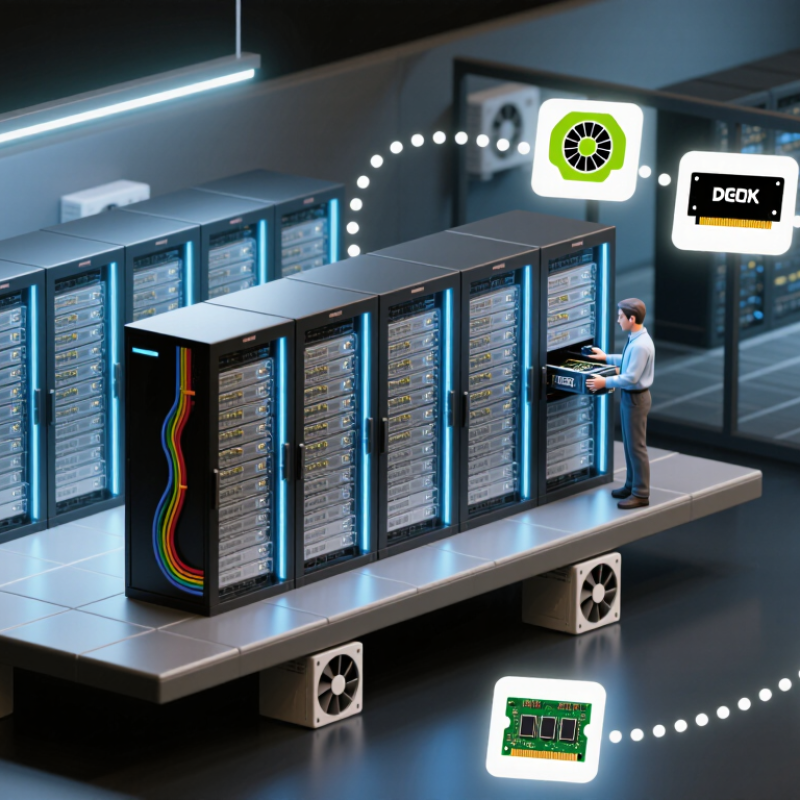
Why Choose an AI Training Server Manufacturer?

What Is an AI Training Server Manufacturer?

An AI training server manufacturer is a company that designs, builds, and tests computer systems for training machine-learning models. Its work may include integrating accelerator cards, processors, memory, storage, and high-speed networking. But assembly is only part of the job. Engineers must consider power delivery, cooling, airflow, and access for repairs. A server that performs well in a brief test may behave differently during a long training run. Details matter.

A manufacturer may validate systems with sustained workloads, monitor temperatures, and check whether components operate together as intended. It may also help customers choose configurations based on model size, data needs, and available power and cooling. Ask what testing was performed, under which conditions, and how the system can be serviced or upgraded. Even a carefully engineered server can be a poor fit for a specific workload. And specifications alone do not tell the whole story. I would look for clear test information and practical support, while remembering that no setup is perfect for every training task.

How AI Training Servers Differ from General-Purpose Systems

An AI training server is designed to keep accelerators busy through long, demanding workloads. General-purpose systems balance many tasks, such as web services, databases, and office applications. Different priorities. Training servers often combine multiple GPUs or other accelerators with high-bandwidth memory and fast connections between processors. When those connections are slow, accelerators may sit idle while data moves. That wastes compute time.

Storage and networking matter, too. Large datasets may come from shared storage, so fast drives alone cannot solve a congested network. A capable design balances data movement, processor capacity, and accelerator count. Cooling and power delivery need equal attention. Dense hardware can create hot spots during sustained runs. Measure the room, not just the rack.

General-purpose servers tend to favor flexibility and mixed workloads. AI training systems are tuned for parallel computation and may need specialized software, careful thermal monitoring, and higher power budgets. More hardware is not always better. If models are small or training jobs run occasionally, an oversized system can waste energy and capital. The right configuration depends on model size, dataset movement, training schedules, and expected growth. Even experienced teams may revise their estimates after real workloads reveal bottlenecks.

Which Design and Production Capabilities Matter?

For an AI training server manufacturer, design capability means more than fitting accelerators into a chassis. It means engineering power delivery, airflow, and service access as one system. The IEA’s Electricity 2024 report estimates that data centres, AI, and cryptocurrency used about 460 TWh in 2022; demand could exceed 1,000 TWh by 2026. That makes thermal design a practical concern, not a brochure detail. Ask how the manufacturer tests airflow across fully populated racks, manages hot spots, and validates power under sustained workloads. Small gaps matter.

Production capability needs the same scrutiny. Look for repeatable assembly, documented component traceability, firmware configuration controls, and burn-in testing under realistic load. A prototype may run well. Can every production unit behave the same way? Uptime Institute’s 2024 Global Data Center Survey reports an average data-center PUE of about 1.58, reinforcing the value of efficient facility design. Server makers cannot control a whole site’s PUE, but they can help reduce avoidable heat and power losses.

Ask for measured results, not only design claims: inlet temperatures, power draw, fan behavior, and service time during component replacement. A technician should be able to reach cables without dismantling half the rack. Even capable manufacturers can miss awkward maintenance details; request a physical service demonstration and review test records before ordering.

How Manufacturers Support Integration and Deployment

An AI training server is not a drop-in appliance. Deployment starts with checking rack depth, floor loading, power delivery, and cooling capacity. A manufacturer can review these constraints before equipment arrives, then provide rack layouts, cabling plans, and validated configuration guidance. That prevents a costly surprise: servers may fit physically but exceed a site’s available power or airflow. Small details matter.

The International Energy Agency’s Electricity 2024 report estimates that data centers used about 460 TWh of electricity in 2022, and demand could exceed 1,000 TWh by 2026.

That outlook makes power and thermal planning central to integration, not an afterthought. Manufacturers can help teams test network links, firmware, and workload software before production, then document acceptance checks such as GPU visibility, cooling alerts, and sustained performance. A useful handover includes clear escalation paths and maintenance procedures, not just a successful boot.

Still, forecasts cannot capture every site’s quirks. A commissioning checklist may miss a poorly placed sensor or an awkward cable bend; teams should leave time for physical inspection and retesting.

What Factors Guide Manufacturer Selection?

Why Choose an AI Training Server Manufacturer?

What Factors Guide Manufacturer Selection?

Start with the actual training workload, not a headline GPU count. A system running long model-training jobs needs balanced accelerators, memory, storage, and network bandwidth. Ask for configuration details, including accelerator memory, host memory, and interconnect speed. Small mismatches can leave costly processors waiting for data.

Thermal design deserves close inspection. Request airflow diagrams, expected power draw, and temperature readings from sustained-load tests. A server that performs well during a short benchmark may behave differently after hours in a warm equipment room. Check whether the manufacturer can explain cooling limits and noise levels clearly. No checklist catches everything. Independent validation may still be worthwhile.

Reliability also depends on parts availability, diagnostics, and support after installation. Ask how faults are logged, which components can be replaced on site, and what response times are offered. Review firmware update practices and documentation before committing. Compare warranty terms alongside the purchase price; downtime has a cost too. I would be cautious about accepting broad performance claims without test conditions. Even careful planning can miss a detail, so leave room to reassess the configuration as workloads change.

FAQS

What does an AI training server manufacturer do?

It designs, assembles, and tests systems for training machine-learning models. These systems combine accelerators, processors, memory, storage, and high-speed networking.

Why does cooling design matter?

Long training runs can create persistent heat. Ask how airflow and hot spots are tested across a fully populated rack. Small gaps matter.

What testing should a manufacturer provide?

Request results from sustained workloads, including temperatures, power draw, and fan behavior. A brief test may not reveal long-run problems.

How can I assess production consistency?

Ask about repeatable assembly, component traceability, firmware controls, and burn-in testing. One successful prototype is not enough.

What power details should I check?

Confirm the system’s power needs and whether your facility can support them. The article cites rising data-center energy demand, but a server’s actual draw depends on its configuration and workload.

Does a server manufacturer control data-center efficiency?

No. Facility design affects overall efficiency, though a server maker can help reduce avoidable heat and power losses. Not the whole picture.

How important is access for repairs?

It matters during routine maintenance. Ask a technician to demonstrate replacing a component and reaching cables without dismantling much of the rack.

How do I know if a configuration fits my workload?

Match it to model size, data needs, and available power and cooling. I might focus too much on specifications; practical test results and support matter too.

Conclusion

Choosing an ai training server manufacturer is an important step in building reliable infrastructure for demanding machine-learning workloads. Unlike general-purpose systems, AI training servers are designed to handle intensive parallel computations, large datasets, and high-speed communication between processors and accelerators. Their performance depends not only on computing power, but also on effective cooling, power delivery, memory capacity, and system stability.

A capable manufacturer should offer strong design and production expertise, testing processes, and options that match specific workload requirements. Support for integration and deployment also matters, including compatibility checks, configuration guidance, and assistance during installation. When comparing manufacturers, consider technical capabilities, customization, product quality, service responsiveness, delivery timelines, and long-term support. Evaluating these factors together can help organizations select a solution that fits their infrastructure and supports efficient, dependable AI training.

Isabella

Isabella

Isabella is a dedicated marketing professional with a sharp focus on driving brand growth and engagement through strategic content creation. With an extensive background in digital marketing, she combines her passion for storytelling with her keen understanding of industry trends to deliver......