Veltrixa Veltrixa

Top AI Server Manufacturers in China for Global Buyers?

Time:2026-09-14 Author:Mason
0%

China has become a significant production base for AI servers, supporting cloud providers, research institutions, enterprises, and system integrators worldwide. This guide examines the top AI server manufacturers in China for global buyers, focusing on engineering capability, component quality, customization, delivery reliability, and after-sales support.

The market includes established computer manufacturers, specialized server brands, and experienced ODM providers. Their systems may combine NVIDIA or domestic accelerators, high-speed networking, redundant power supplies, and liquid-cooling options. Some suppliers build compact four-GPU workstations. Others deliver dense racks designed for demanding training clusters. Details matter. A polished product page does not guarantee stable firmware, thermal performance, or responsive technical support.

NVIDIA founder and CEO Jensen Huang has described modern data centers as “AI factories.” His observation reflects a practical reality: an AI server is not merely a box filled with GPUs. It is part of a larger production system involving power distribution, cooling, storage, networking, monitoring, and maintenance. Global AI server manufacturers must therefore be evaluated as infrastructure partners, not only equipment vendors.

This article compares Chinese manufacturers through a buyer-focused lens. It considers factory experience, validation procedures, international certifications, warranty terms, documentation, and supply-chain transparency. It also highlights limitations, because no ranking is perfect. Component availability can change quickly. Export controls and regional service capabilities may affect purchasing decisions. A supplier that performs well for one project may not suit another. Careful testing is still necessary.
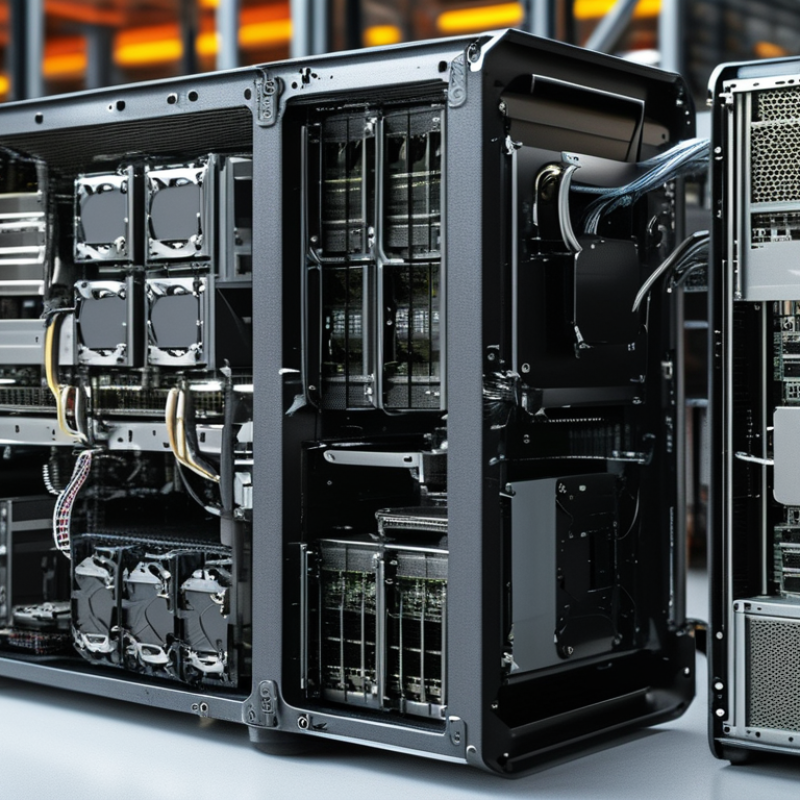
Top AI Server Manufacturers in China for Global Buyers?

What Defines an AI Server Manufacturer in China?

A credible AI server manufacturer in China is more than a factory assembling imported parts. It should design, test, integrate, and support complete computing systems. Engineers must understand GPU density, high-speed networking, storage performance, and liquid cooling. These details decide whether a server survives continuous model training.

TrendForce estimated that global AI server shipments would grow by about 28% in 2025. This growth raises pressure on Chinese manufacturers to deliver stable capacity, not only attractive prices. A serious manufacturer should provide burn-in testing, thermal validation, firmware control, and traceable component records. Buyers should also inspect power-distribution designs and rack-level cooling plans. Small weaknesses become expensive at scale.

Reliability matters more than impressive specifications. The Uptime Institute Global Data Center Survey 2024 reported that power problems remained a leading cause of serious data-center outages. Therefore, manufacturers need documented redundancy testing and practical service procedures. Regional spare-parts coverage, remote diagnostics, and clear warranty terms also reveal operational maturity. A manufacturer should explain failure rates honestly, even when the numbers are uncomfortable. That transparency is not perfect, but it builds confidence. A polished brochure cannot replace evidence from factory audits, deployment references, and repeatable acceptance tests.

Leading Chinese AI Server Manufacturers for Global Buyers

Chinese AI server manufacturers are attracting global buyers with flexible configurations, strong production capacity, and competitive engineering support. Many suppliers build systems for model training, inference, scientific computing, and enterprise analytics. Buyers can request different accelerator combinations, memory sizes, storage layouts, and network designs. This flexibility matters when workloads change quickly.

A reliable manufacturer should explain thermal performance clearly. Look for airflow diagrams, liquid-cooling options, power budgets, and noise measurements. Ask for burn-in testing records and component traceability. Certifications for the target market also deserve careful review. A serious supplier can provide technical drawings, firmware information, warranty terms, and replacement procedures before payment. Trial units are valuable. They reveal cable quality, rack compatibility, and maintenance difficulty.

Pricing alone can mislead global buyers. Delivery time, customs documents, remote support, and spare-part access affect the real cost. Communication can still be imperfect, especially across time zones and technical languages. Clarify every specification in writing. No supplier is perfect. Even a well-tested server may require BIOS tuning, cooling adjustments, or software compatibility work after installation. Buyers should compare at least three Chinese manufacturers using the same workload, power limit, and acceptance criteria. A short pilot deployment often provides more evidence than a polished sales presentation.

AI Server Types, Components, and Core Technologies

Top AI Server Manufacturers in China for Global Buyers?

AI servers from Chinese manufacturers generally fall into three practical types: training systems, inference servers, and compact edge platforms. Training systems use multiple accelerators, high-speed interconnects, and large memory pools for model development. Inference servers prioritize response speed, energy efficiency, and stable deployment. Edge platforms place smaller computing units near factories, hospitals, or cameras. They reduce network delay, but their performance can be limited.

Core components determine real-world value. Accelerators handle parallel AI calculations, while CPUs manage scheduling and general workloads. High-bandwidth memory supports demanding models. NVMe storage reduces data-loading delays. Network cards and switch fabrics connect multiple servers with less communication bottleneck. Power supplies, fans, and liquid cooling also matter. Heat matters. A powerful processor can throttle inside a poorly designed chassis.

During supplier evaluation, I check workload tests rather than relying on headline performance. Ask for accelerator utilization, noise levels, thermal results, firmware update procedures, and spare-part availability. Rack depth, voltage compatibility, operating-system support, and security documentation deserve equal attention. Chinese manufacturers may offer flexible configurations and strong production capacity, but documentation quality can vary between suppliers. Specifications can mislead. Independent testing remains worthwhile. I would also verify warranty coverage, remote support, shipment requirements, and local service capability before placing a large order. A less powerful server with mature maintenance may outperform a faster system that sits idle during repairs.

Manufacturing Standards, Supply Chains, and Quality Control

For global buyers, Chinese AI server manufacturing should be judged by evidence, not production volume. A reliable factory should operate an ISO 9001-based quality system, maintain component traceability, and document every inspection stage. Buyers should request serial-level records for processors, memory, power units, and cooling assemblies. Manufacturing experience becomes visible in small details, such as clean cable routing, sealed packaging, and consistent torque marks on fasteners.

Supply-chain resilience deserves equal attention. The International Energy Agency’s Energy and AI report estimates that data-center electricity use reached about 415 TWh in 2024 and may exceed 945 TWh by 2030. This growth increases demand for efficient power systems, liquid-cooling parts, and replacement inventory. A capable manufacturer should show approved supplier lists, alternative component plans, and realistic lead times.

“Available” stock is sometimes only a spreadsheet promise.

Quality control must continue after assembly. Factory acceptance tests should cover boot stability, thermal performance, power-load behavior, network throughput, and extended burn-in. Uptime Institute’s 2024 Global Data Center Survey continues to identify power incidents as a major outage concern. Buyers should therefore review test limits, calibration dates, and failure-handling procedures.

Traceability matters. Still, no process is perfect. Some factories may overemphasize inspection percentages while missing software errors or connector fatigue. Independent sampling and witnessed testing remain worthwhile before large shipments.

How Global Buyers Evaluate Chinese AI Server Suppliers

Global buyers evaluate Chinese AI server suppliers through evidence, not attractive specifications alone. They compare GPU compatibility, memory capacity, cooling design, and rack density against real workloads. A supplier should explain performance under sustained heat, not only peak benchmark scores. Numbers matter. Ask for test reports, power readings, and clear configuration details.

Factory experience becomes visible during technical discussions. Experienced teams can recommend suitable processors, network cards, storage layouts, and firmware settings for different industries. They should also describe burn-in testing, component traceability, and replacement procedures. Buyers often request a sample unit before placing a larger order. This reveals cable management, fan noise, packaging quality, and documentation accuracy. Small details become expensive later.

Reliability also depends on communication after shipment. Global buyers examine response times, spare-parts planning, remote support, and warranty terms across different regions. They may ask whether engineers can diagnose a failed power module from log files and photographs. A professional supplier will admit limits instead of promising impossible delivery dates. That honesty is valuable. Still, written commitments need careful checking. One overlooked voltage requirement or customs document can delay an installation for weeks. Buyers should compare several quotations, inspect references, and keep technical requirements precise from the first email.

FAQS

What should define a credible AI server manufacturer in China?

It should design, test, integrate, and support complete computing systems. Assembly alone is not enough. Engineers should understand accelerators, networking, storage, and cooling.

Which AI server types are commonly available?

Training servers use multiple accelerators and large memory pools. Inference servers emphasize speed and energy efficiency. Compact edge systems place computing near factories, hospitals, or cameras.

Why is cooling important in AI servers?

Continuous model training creates substantial heat. Poor cooling can reduce processor speed or cause shutdowns. Liquid cooling may help dense racks. Heat matters.

What testing should buyers request?

Request burn-in testing, thermal validation, and workload results. Check accelerator utilization, noise levels, and firmware procedures. Repeatable acceptance tests are valuable.

How can buyers judge server reliability?

Ask for redundancy tests, failure-rate information, and service procedures. Review spare-parts coverage and remote diagnostics. Honest numbers matter, even when uncomfortable.

Which components strongly affect real-world performance?

Accelerators handle parallel calculations, while CPUs manage scheduling. High-bandwidth memory supports demanding models. NVMe storage reduces loading delays. Network fabrics limit communication bottlenecks.

What practical details should be checked before ordering?

Confirm rack depth, voltage compatibility, operating-system support, and security documentation. Also verify warranty terms, shipment requirements, and local technical assistance.

Are attractive specifications enough for supplier selection?

No. A powerful server can remain idle during repairs. Independent testing and deployment references provide stronger evidence. My checklist may still miss something.

How should buyers compare performance and maintenance?

Compare complete workload results, not only headline speed. A slightly slower system with mature support may deliver better uptime. Fast hardware is not everything.

What warning signs suggest a supplier needs closer review?

Vague cooling plans, limited component records, and unclear warranty terms deserve attention. Inconsistent documentation is another warning sign. Brochures are not proof.

Conclusion

China has become an important sourcing destination for global AI server manufacturers, offering broad production capacity, flexible customization, and integrated supply chains. This article explains what defines a capable AI server manufacturer, including engineering expertise, scalable production, reliable component sourcing, and strong after-sales support. It also introduces the main server types used for AI training, inference, data processing, and high-performance computing, along with key technologies such as GPU acceleration, high-speed networking, advanced cooling, power management, and rack-level integration.

For global buyers, supplier evaluation should go beyond price. Manufacturing standards, quality-control procedures, testing systems, delivery consistency, technical documentation, and communication capabilities are essential considerations. Buyers should also assess component traceability, customization options, warranty terms, compliance readiness, and long-term service support. By comparing these factors systematically, international customers can identify dependable Chinese suppliers that balance performance, cost efficiency, production reliability, and sustainable cooperation for diverse AI infrastructure projects.

Mason

Mason

Mason is a seasoned marketing professional with a deep expertise in the company's offerings and a passion for driving brand awareness. With a strong background in digital marketing strategies, he has an innate ability to connect with diverse audiences and effectively communicate product benefits.......