Veltrixa
A cloud AI server manufacturer designs and builds the infrastructure that powers artificial intelligence in cloud data centers. These companies combine GPU or accelerator systems, high-speed networking, storage, cooling, firmware, and management software. Their products support model training, inference, scientific computing, and large-scale data processing.
This is not simply a business that sells powerful computers. A capable cloud AI server manufacturer must balance performance, energy use, reliability, serviceability, and supply-chain consistency. Engineers test servers under sustained workloads, where heat and power demand can expose weak designs. They also validate connections between accelerators, CPUs, memory, and network switches. Small failures matter.
Jensen Huang, founder and CEO of NVIDIA, said, “The future of computing is accelerated computing.” His statement reflects the market’s shift toward specialized hardware for demanding AI workloads. However, hardware alone does not create a dependable cloud platform. Operators also need monitoring, secure firmware updates, redundancy, and clear technical support.
In practice, a manufacturer may deliver complete rack-scale systems instead of individual machines. These racks can include liquid cooling, redundant power supplies, and carefully arranged cables. The details are unglamorous. They determine uptime.
A useful definition must remain practical. Some manufacturers design their own platforms, while others integrate components from several suppliers. That distinction can affect customization, pricing, repair times, and accountability. It is also where marketing claims deserve scrutiny. High benchmark results may not represent real production conditions.
Understanding what a cloud AI server manufacturer does requires looking beyond processors. The real product is a tested, maintainable computing system that helps organizations run AI reliably. Even this definition is imperfect, because the industry changes faster than most purchasing frameworks.
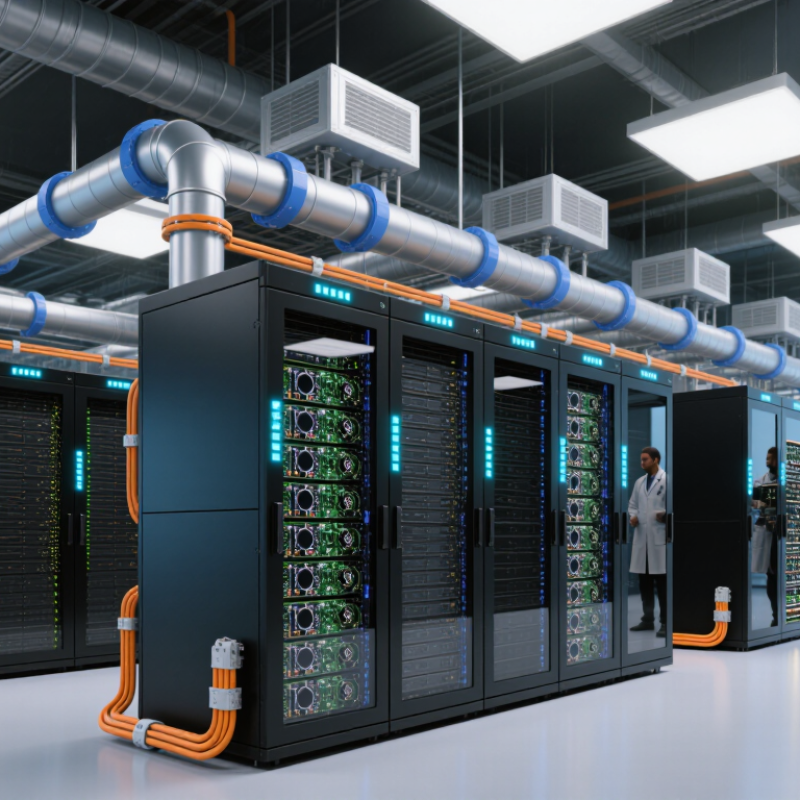
A cloud AI server manufacturer is a company that designs, builds, and validates hardware for artificial intelligence workloads in cloud environments. It produces complete systems, not just individual processors. These systems may include AI accelerators, high-speed networking, memory, storage, firmware, and liquid or air cooling equipment.
It is physical infrastructure. That distinction matters. A cloud AI server manufacturer usually supplies cloud operators, enterprise data centers, and infrastructure partners. Its engineers match server layouts with model training, inference, and data-processing requirements. For example, a rack may need dense accelerator modules, redundant power supplies, and carefully arranged airflow. Poor thermal planning can reduce performance or shorten component life.
The manufacturer also tests hardware under sustained workloads. Testing can include temperature changes, network congestion, power fluctuations, and long training sessions. Reliable documentation, traceable components, and practical service procedures are equally important. A technically impressive server is less useful if technicians cannot replace a failed module quickly.
The definition is evolving. Some manufacturers now provide reference architectures, remote monitoring tools, and software integration. However, supplying software does not automatically make a company a cloud provider. The manufacturer creates and supports the computing foundation, while another organization may operate the cloud platform.
The boundary is not perfectly fixed. Some companies design systems, manage deployment, and offer limited infrastructure services. That overlap can confuse buyers. Clear specifications, measured performance data, security controls, and realistic maintenance commitments help customers judge the difference. A careful evaluation should examine the whole rack, not only the processor.
A cloud AI server manufacturer builds computing systems for shared, remote workloads. Its work extends beyond assembling racks. It combines processors, memory, networking, storage, power, and cooling into one dependable platform.
Core production starts with high-density accelerator boards and fast interconnects. These links move data between processors with minimal delay. Engineers also design balanced power distribution, because sudden current changes can destabilize a server. Liquid cooling may carry heat away through cold plates, pumps, and monitored tubes. Air cooling remains useful in less dense configurations. The correct choice depends on workload, facility design, and maintenance capacity.
Firmware and system software are equally important. They monitor temperature, voltage, fan speed, and hardware errors. Management controllers can isolate a failing node before it affects other workloads. Manufacturers validate systems with thermal cycling, memory checks, network stress, and repeated power events. They also test scheduling behavior under long AI training runs. Small details matter, such as cable paths and service access. A blocked airflow channel can reduce performance in minutes.
Reliable production requires documented procedures and traceable test results. Technicians should record component batches, firmware versions, and repair history. No design is perfect. Liquid systems can add maintenance concerns, while dense air systems may consume more energy. Engineers must question their assumptions through field data, not only laboratory results. That practical feedback often improves the next server generation.
A cloud AI server manufacturer designs computing systems for large-scale model training, inference, and data processing. The work extends beyond assembling processors. Engineers select accelerators, high-speed memory, networking fabrics, storage, power supplies, and cooling systems as one balanced platform.
According to the Stanford AI Index 2025 report, the compute used to train notable AI models has doubled roughly every five months. This pressure changes server design quickly. Engineers now build dense nodes with fast interconnects, because moving data between accelerators can limit performance. A typical rack may require liquid cooling, redundant power paths, and sensors monitoring temperature, airflow, voltage, and workload behavior.
Power is a serious constraint. The International Energy Agency’s Electricity 2024 report estimates that global data-center electricity use could exceed 1,000 terawatt-hours by 2026. That figure makes efficiency a design requirement, not a marketing detail. Manufacturers test thermal performance under sustained loads, validate firmware, and simulate failures before deployment.
The process is not perfect. Cooling models can miss unusual workload spikes. Components may also perform differently across batches. Experienced teams therefore combine laboratory testing with field telemetry and repeated revisions. Reliability depends on small choices, including cable paths, fan curves, service access, and recovery procedures. A powerful server that cannot be maintained quickly is still an incomplete design.
What Is a Cloud AI Server Manufacturer?
A cloud AI server manufacturer designs, builds, and supports computing systems for artificial intelligence workloads. Its services extend beyond hardware assembly. Teams may assess model size, data volume, cooling needs, and expected user traffic before recommending a configuration. They can provide GPU or accelerator servers, high-speed networking, storage systems, and rack integration. In practical deployments, small design choices affect training time, electricity use, and maintenance effort.
Services Provided by Cloud AI Server Manufacturers
Manufacturers often customize servers for training, inference, research, or private cloud environments. Their engineers may install operating systems, drivers, orchestration tools, and monitoring software. They can also test performance before delivery and help integrate servers with existing data centers. After deployment, reliable providers offer remote diagnostics, firmware updates, replacement planning, and technical consultation. Security assessments, access controls, and workload isolation may also form part of the service. No design is perfect. A rushed specification can create hidden costs later.
Tips: Ask for clear performance testing, power estimates, warranty terms, and response times. Check whether support includes installation and software compatibility. Request realistic results using workloads similar to yours. Avoid choosing only by processor count. Cooling, network capacity, and future expansion matter too. Small details matter. A useful provider explains limitations openly and records every configuration change. That transparency supports safer operations and more dependable AI performance.
Cloud AI server manufacturers provide integrated hardware, infrastructure, software, and operational services for deploying and running artificial intelligence workloads.
The chart summarizes the main service areas typically delivered across the cloud AI server manufacturing lifecycle, from server design and accelerator integration to networking, storage, security, monitoring, and technical support.
A cloud AI server manufacturer designs and builds systems for remote machine-learning workloads. These systems combine accelerators, CPUs, high-speed memory, networking, storage, and management software. Unlike a standard server maker, it must support intensive training, inference, and data pipelines. IDC reported that worldwide AI infrastructure spending reached approximately $154 billion in 2023. That growth increases pressure on manufacturers to deliver dependable, scalable platforms.
Evaluation should begin with performance per dollar, not accelerator count alone. Ask for verified benchmarks using your models, batch sizes, and data formats. Check memory capacity, interconnect bandwidth, power usage, and cooling requirements. The Uptime Institute reported that 54% of surveyed data-center outages caused at least $100,000 in direct or indirect losses in its 2024 analysis. Therefore, inspect component quality, redundant power design, remote monitoring, and repair procedures. A fast server that remains unavailable is not a strong investment.
Supply-chain resilience also matters. Review delivery history, spare-part access, firmware governance, and warranty response times. Security controls should include signed updates, hardware-rooted protection, and clear vulnerability handling. Ask whether the manufacturer supports open management standards and common orchestration tools. Independent certifications can strengthen trust, but they cannot replace hands-on testing. No scorecard is perfect. I would still run a small pilot under realistic heat, utilization, and network conditions. Measure completed jobs, energy consumed, recovery time, and operator workload. These details often reveal weaknesses hidden by attractive laboratory results.
It designs, builds, tests, and supports complete AI computing systems. These systems may include accelerators, networking, memory, storage, firmware, and cooling.
No. The manufacturer creates the physical infrastructure. Another organization may operate the cloud platform and manage customer workloads.
They can support model training, inference, research, data processing, and private cloud environments. Each workload may require different hardware layouts.
Yes. Engineers may adjust accelerator capacity, memory, storage, networking, cooling, and power systems. The configuration should match traffic and data requirements.
Dense accelerator systems generate substantial heat. Poor airflow can reduce performance, shorten component life, or increase maintenance work.
Request workload-based performance tests, power estimates, thermal results, and network measurements. Long training tests reveal problems more clearly.
Support may include installation, remote diagnostics, firmware updates, replacement planning, software integration, and technical consultation. Response times should be written clearly.
Compare complete rack designs, not processor counts alone. Review performance data, security controls, expansion capacity, warranty terms, and service procedures.
Avoid choosing a system only because it has more accelerators. A rushed specification can create hidden electricity, cooling, and compatibility costs.
No. Some providers offer limited software or infrastructure support. Read the service boundaries carefully, because assumptions can become expensive.
A cloud ai server manufacturer is a company that designs, produces, and supports high-performance computing systems for cloud-based artificial intelligence workloads. These manufacturers combine advanced processors, accelerators, high-speed memory, networking components, storage systems, and efficient power and cooling technologies to create servers capable of handling machine learning, data analysis, model training, and real-time inference. Their products are built through careful system architecture, component integration, testing, security checks, and performance optimization to ensure reliability in demanding data center environments.
In addition to hardware production, a cloud ai server manufacturer may provide system configuration, deployment assistance, technical support, maintenance, upgrades, and customized solutions for different workload requirements. When evaluating a manufacturer, organizations should consider computing performance, scalability, energy efficiency, product reliability, compatibility with cloud platforms, security capabilities, delivery capacity, warranty terms, and the quality of after-sales service. A strong manufacturer should offer transparent specifications and flexible solutions that can adapt to changing AI workloads while maintaining stable and cost-effective operation.
