Veltrixa
Veltrixa
Veltrixa
Modern industrial production relies heavily on equipment uptime. The transition from reactive ("run-to-failure") and preventive ("scheduled maintenance") protocols to Predictive Maintenance (PdM) has emerged as a cornerstone of the Industrial Internet of Things (IIoT). By implementing customized OEM predictive maintenance solutions, enterprises can identify mechanical and electrical anomalies before they lead to catastrophic system downtime.
However, predictive maintenance is not merely a software challenge. It requires a robust, high-performance physical hardware tier capable of continuously acquiring, filtering, and processing complex multi-dimensional sensor data (vibration, acoustics, thermography, and load cycle parameters). This is where custom computing infrastructure plays a critical role. Without enterprise-grade edge servers, high-density GPU computing nodes, and scalable storage arrays, the high frequency sensor telemetry cannot be analyzed in real-time.
Deploy low-latency local inference nodes that process sensor streams directly at the factory floor level, cutting bandwidth dependencies.
Develop, validate, and update complex remaining useful life (RUL) prediction models using multi-GPU servers designed for high parallel workloads.
Handle continuous high-write operations from millions of IoT sensors with optimized enterprise NAS and SSD storage networks.
Across the Americas, Western Europe, and the Asia-Pacific region, the demand for PdM solutions is growing at an unprecedented CAGR. Industrial operations are transitioning from isolated control systems (SCADA) to Unified Namespace (UNS) architectures, where data is seamlessly aggregated and analyzed. In heavy industries like petrochemical processing, automotive assembly, and offshore wind power, a single hour of unplanned downtime can result in losses exceeding $250,000.
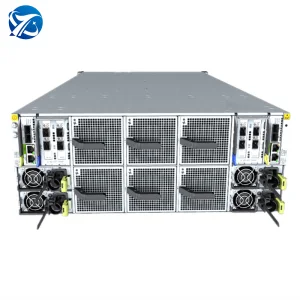
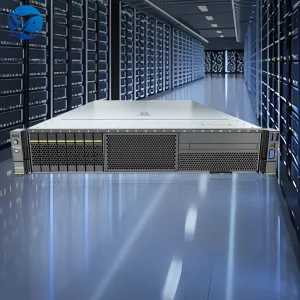
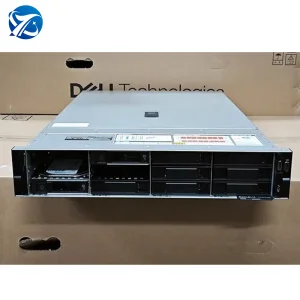
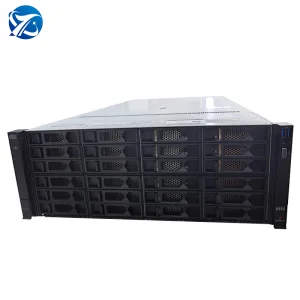
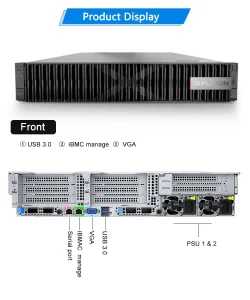
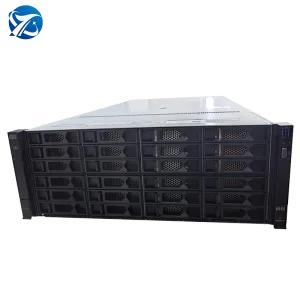
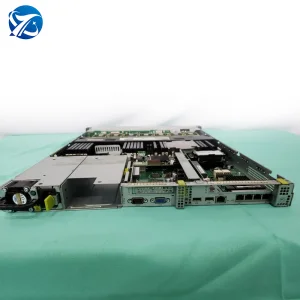
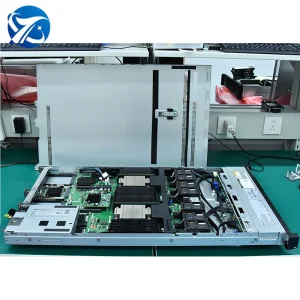
One of the primary challenges for global system integrators is retrofitting existing industrial installations. Custom OEM solutions must act as a bridge, accepting legacy protocol outputs (e.g., Modbus, OPC-UA, Profinet) and translating them into neural network compatible formats. At Veltrixa, we design rack-mount edge computing architectures that feature the necessary I/O density and processing power to handle local translation and model execution simultaneously.
Historically, predictive maintenance relied on simple threshold-based alerts. Today, multi-variate anomaly detection leverages complex models such as Autoencoders, LSTMs, and customized Transformer architectures. Training and executing these deep learning models locally or in private clouds requires robust hardware configurations. By deploying AI GPU servers equipped with high-speed memory and specialized tensor cores, enterprises can execute real-time inference on hundreds of high-frequency streams without data latency.
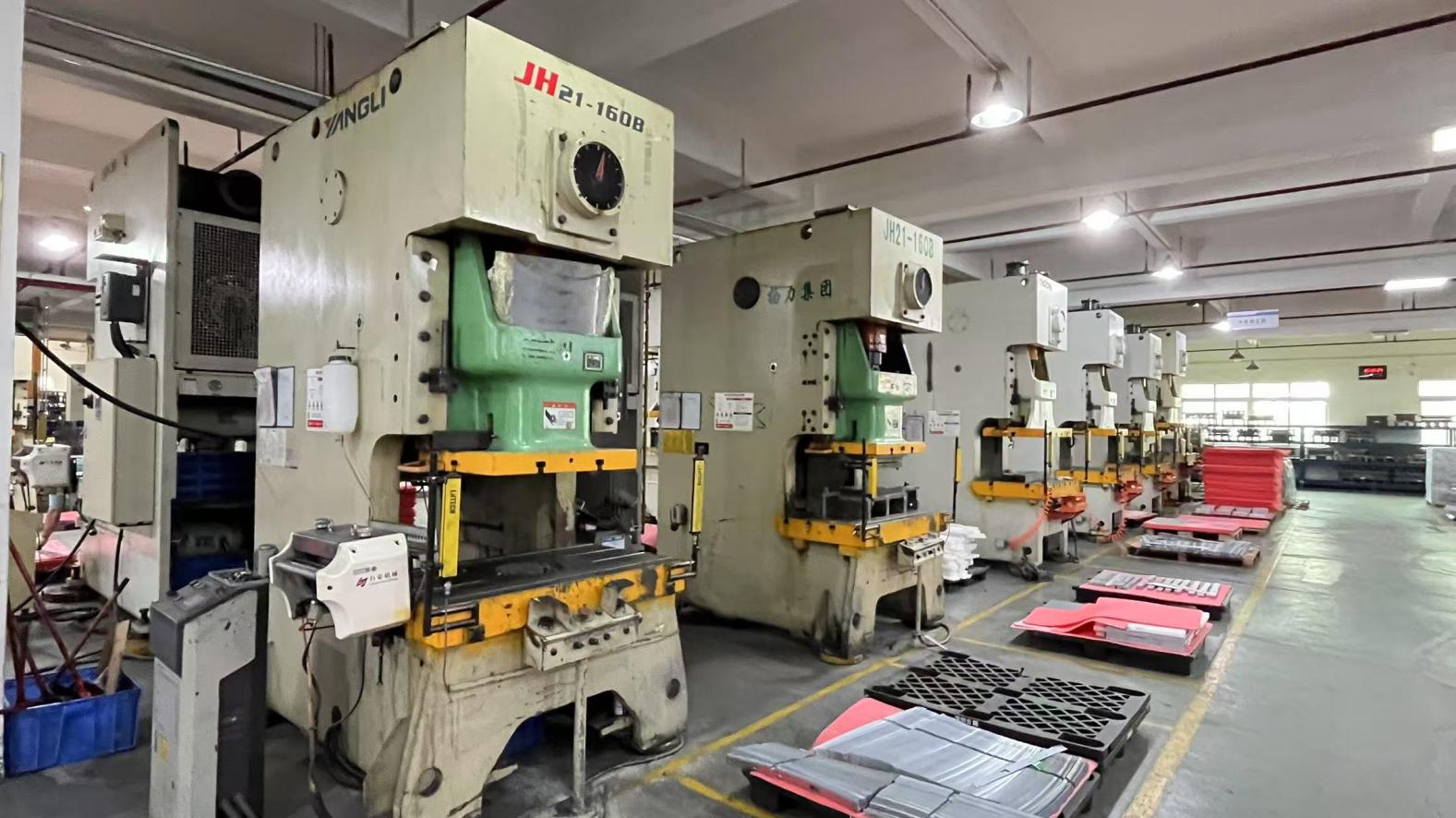
Established in 2017, Shenzhen Veltrixa Intelligent Computing Co., Ltd. is a leading manufacturer and solution provider specializing in AI GPU servers, high-performance computing (HPC) platforms, edge AI systems, and customized data center infrastructure. Located in the technology hub of Shenzhen, China, Veltrixa operates a modern production facility covering 386 m². The facility is fully equipped with advanced assembly, testing, and quality control systems to support high-reliability OEM/ODM hardware manufacturing.
Every system produced by Veltrixa undergoes a thorough inspection cycle before leaving our facility. We employ 46 dedicated QC professionals who implement a 100% Pre-Shipment Inspection protocol. Our verification pipeline includes:
Continuous burn-in tests under maximum computational loads validate thermal dissipation and prevent field component failures.
Comprehensive checks across major operating systems and virtualization platforms (e.g., Windows Server 2025, Linux, VMware, Proxmox).
Evaluating computational throughput for complex mathematical calculations, verifying that memory, GPU, and SSD subsystems achieve peak theoretical rates.
Backed by 86 R&D engineers, Veltrixa possesses the engineering capability to offer complete hardware customization. Whether you require customized chassis dimensions, specific power supply redundancy (AC/DC configurations), custom branding, or rack-level integration, we deliver systems engineered to operate in diverse enterprise environments.
A resilient predictive maintenance deployment requires a tiered computing topology. The architecture is divided into three key physical hardware layers:
| Hardware Layer | Key Functions | Veltrixa Hardware Solutions |
|---|---|---|
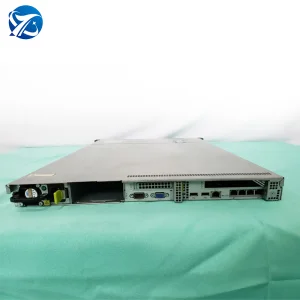
| 1. Edge Data Acquisition & Ingestion | Translates sensor signals, filters noise, manages data buffering. | Edge AI Servers, Compact 1U/2U Rackmount Systems. |
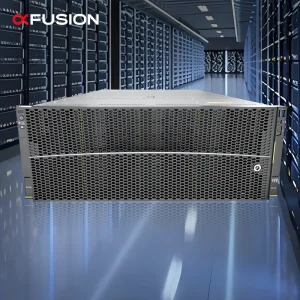
| 2. Regional Aggregation & Real-time Inference | Executes local AI models (Autoencoders, LSTM) to detect immediate anomalies. | 2U/4U Multi-Socket GPU Servers, High-Density Nodes. |
| 3. Centralized AI Model Training & Analytics | Processes historical telemetry datasets, retrains models, performs fleet-wide forecasting. | High-Performance GPU Clusters, Liquid-Cooled AI Compute Systems. |
To address rising energy costs and density limits, Veltrixa is advancing its Liquid Cooling Computing Systems. Direct-to-chip (D2C) liquid cooling reduces server-level power consumption by up to 40% compared to traditional forced-air setups. In addition, our next-generation R&D projects focus on hardware optimization for Edge LLM (Large Language Model) processing. This allows technicians to query industrial hardware health statuses using natural language, directly at the edge node.
Predictive maintenance demands change based on environmental and regulatory factors. Veltrixa's hardware platform is designed to support various localized use cases:
Edge nodes deployed at regional substations analyze oil quality, acoustic profiles, and thermal variations in distribution transformers to prevent structural faults.
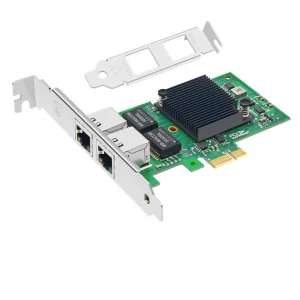
Synchronized robotic arms on manufacturing lines are monitored using high-speed data acquisition cards, tracking torque anomalies and motor wear patterns in real-time.
Ruggedized edge servers located in wind turbine nacelles process continuous vibration data from gearboxes and main bearings, mitigating high offshore maintenance costs.
By providing flexible physical custom designs (such as high IP-rated dustproof chassis and wide operating temperature ranges), Veltrixa ensures system performance whether deployed in a controlled modern data center or directly on an unconditioned factory floor.
Deploying IIoT solutions requires strict adherence to localized security and regulatory frameworks. Veltrixa is committed to assisting our global customers with compliance requirements, including:
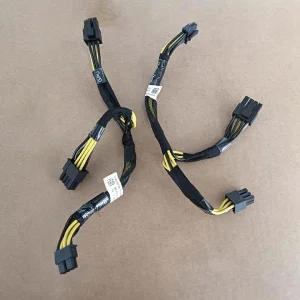
Through our network of over 1,280 component suppliers, we maintain inventory levels of critical components (including PCIe Gen 5 cables, RAID controllers, and power supplies). This helps buffer against supply chain disruptions and ensures stable delivery times for critical OEM projects.