Veltrixa
Veltrixa
Veltrixa
Explore our premium lineup of high-density computing servers, storage solutions, and customizable hardware modules engineered for enterprise AI clusters.
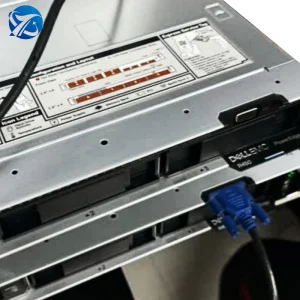
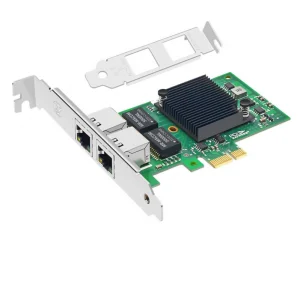
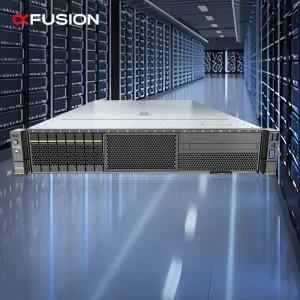
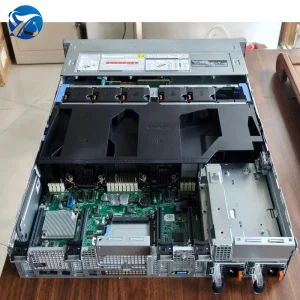
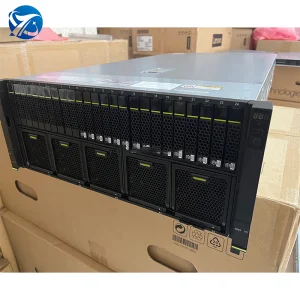
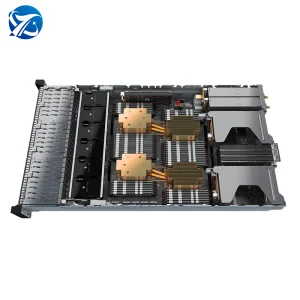
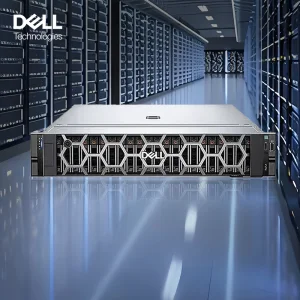
The rapid expansion of Large Language Models (LLMs) like DeepSeek, GPT-4, and specialized generative AI systems has fundamentally changed modern data center infrastructure. Standard high-performance CPU architectures are no longer sufficient. High-density GPU heterogeneous computing has transitioned from an advanced engineering choice to a core business necessity.
Custom OEM/ODM AI GPU Hosting bridges the gap between raw hardware manufacturing and application-specific server deployments. Globally operating hyperscalers, local cloud service providers (CSPs), and research centers require hardware platforms tailored to specific interconnect topologies (such as NVIDIA NVLink, NVSwitch, and PCIe Gen 5.0 systems) to eliminate data bottlenecks and maintain compute efficiency.
At Shenzhen Veltrixa Intelligent Computing Co., Ltd., we design high-efficiency, multi-GPU computing environments. We address key design factors including thermal dissipation capacity (TDP exceeding 700W–1000W per GPU node), high-throughput network configurations (such as 400G InfiniBand and RoCE v2), and robust power distribution unit (PDU) systems to ensure sustained processing capacity.

A trusted partner in custom AI compute infrastructure, combining advanced R&D depth with modern manufacturing facilities.
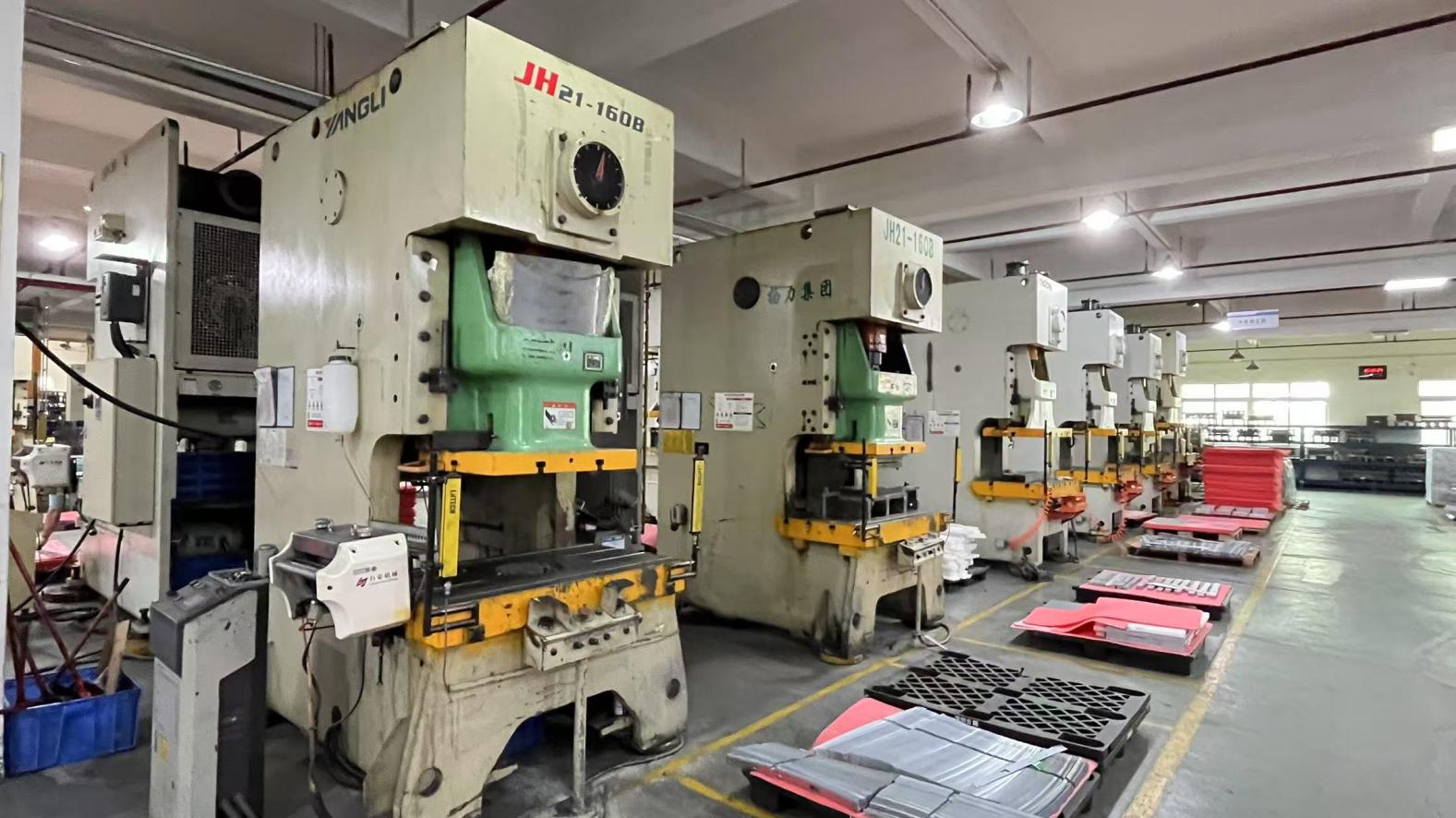
Located in Shenzhen, China, Veltrixa operates a modern production facility designed for assembling, testing, and verifying complex, high-density server equipment. Our core services address the dynamic requirements of hyperscale cloud environments, deep learning centers, and enterprise edge computing environments.

Deploying AI training and inference models requires changes to standard server chassis designs, power architectures, and thermal management systems.
As single GPU accelerators approach TDPs of 700W to 1000W+, standard air cooling is no longer efficient. The industry is rapidly adopting closed-loop direct liquid cooling and liquid-to-air hybrid cooling options. We design server blocks with specialized cold plates, manifold integrations, and dry-break leak protection systems.
Scaling AI compute requires high-speed connections between accelerator cards. Our designs feature optimized PCIe Gen 5.0 PCB layouts and support high-density mezzanine connectors (SXM5 and OAM modules). This maximizes NVLink/NVSwitch and Infinity Fabric bandwidth for parallel model training.
Enterprise procurement has shifted from single-server nodes to complete integrated racks. Providing rack-scale systems requires integrated power distribution (such as busbar configurations), network cabling (InfiniBand/RoCE), and pre-validated software layers to allow plug-and-play installation in data centers.
Providing optimized, deployment-ready hardware solutions tailored to specific workloads, data compliance requirements, and scale targets.

For training large language models, we provide custom 4U/8U GPU server nodes designed for SXM5 or OAM accelerator platforms. Our systems feature dual Intel Xeon Scalable or AMD EPYC processors, 8x accelerator bays, PCIe Gen 5 routing, and up to 8x high-speed NIC bays. This helps ensure low-latency communication during distributed deep learning workflows.
Inference workloads require high storage throughput, low processing latency, and flexible PCIe expansion card choices. Our 2U/4U rack server layouts support multiple PCIe GPU cards (like NVIDIA L40S, L4, or AMD Instinct systems). These layouts are optimized for deep learning models, retrieval-augmented generation (RAG), and cloud-hosted vector search engines.

For processing AI data closer to the source—such as in smart manufacturing, regional telecom offices, or remote branch locations—we design edge compute servers. These systems feature shallow-depth chassis, dust filtration, and robust vibration protection, maintaining performance in non-traditional server room environments.
Reliable computing hardware is essential. Veltrixa implements detailed quality control protocols at every stage of the manufacturing process.
Every server that leaves our facility undergoes a complete diagnostic process. This includes functional testing, component stress testing, thermal chamber validation, and peripheral compatibility checks.
We run full-load stress tests (utilizing specialized CUDA and deep learning testing suites) for up to 72 hours. This process helps identify potential infant mortality failures in electronic components before final shipping.
Our dedicated quality assurance team monitors each step of production—from incoming component inspection (IQC) to in-process line inspections (IPQC) and final outgoing quality checks (OQA).
Our export operations cover key markets in North America, Western Europe, Southeast Asia, the Middle East, and Australia. Veltrixa designs products that meet regulatory standards including FCC, CE, RoHS, and CCC. This helps simplify the integration of our hardware systems into global enterprise data centers.
Aligning custom hardware development with the next generation of computing architectures, memory standards, and sustainable system designs.
As computing requirements grow, our R&D roadmap focuses on integrating PCIe Gen 6.0 system buses. This interface doubles the bandwidth of PCIe 5.0, enabling faster interconnect speeds. Additionally, we are developing Compute Express Link (CXL) memory expander platforms to allow dynamic memory sharing between host CPUs and GPU accelerators, helping optimize resource utilization across complex workloads.
For next-generation data centers targeting low power usage effectiveness (PUE) scores, we are testing single-phase and two-phase direct immersion cooling chassis. These systems submerge server nodes in specialized dielectric fluids, eliminating standard heat sinks and fans. This approach can reduce cooling energy usage by up to 90% while allowing denser server clustering.
We support open standards by incorporating design patterns from the Open Compute Project (OCP). Our future server platforms utilize the Open Accelerator Module (OAM) standard and standardized DC-SCM management boards. This modular approach helps reduce vendor lock-in and simplifies hardware maintenance cycles for large-scale deployments.
A look inside our manufacturing processes, testing chambers, and hardware customization bays in Shenzhen.
Find answers to common technical queries regarding our OEM/ODM custom server capabilities, design options, and deployment processes.
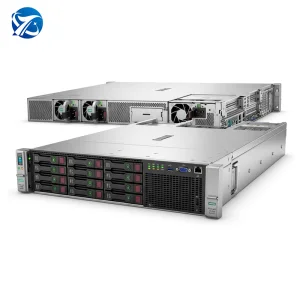
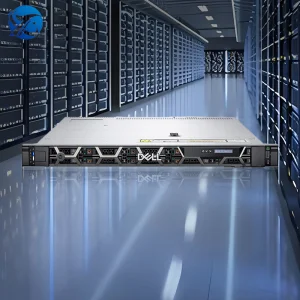
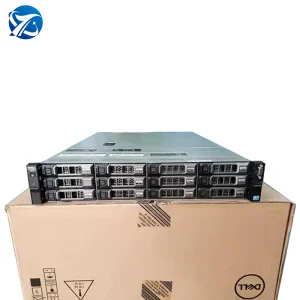
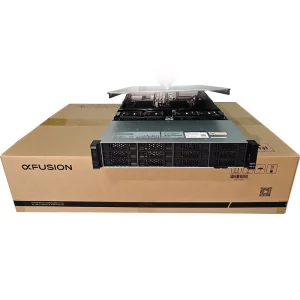
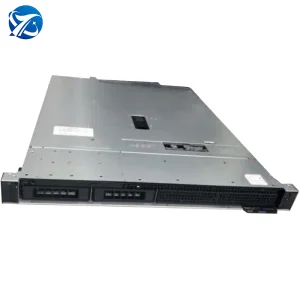
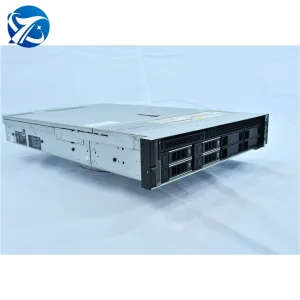
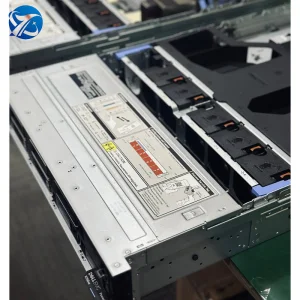
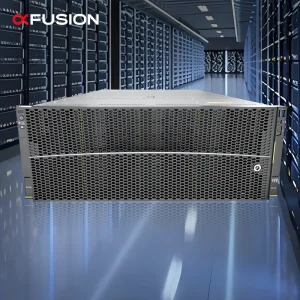
Select from our range of 1U, 2U, and 4U servers designed for high-density storage, hyperconverged infrastructure, and enterprise data processing.