Veltrixa
Veltrixa
Veltrixa
Optimized rack-mount platforms deployed at scale within the Metropolitan Area of the Valley of Mexico (ZMVM), offering highly efficient thermal architectures tailored for high-altitude environments.
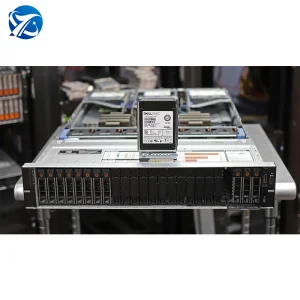
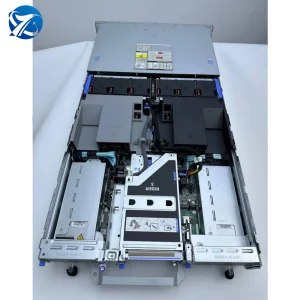
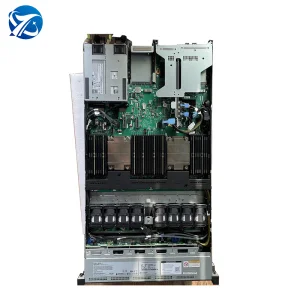
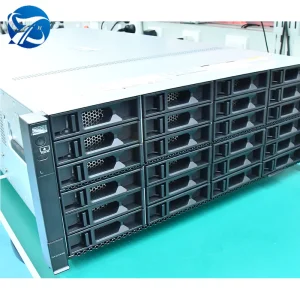
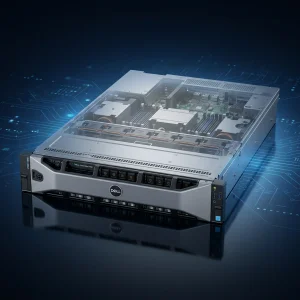
As the primary financial and corporate command center of Latin America, the Metropolitan Area of Mexico City (CDMX), extending along the Querétaro-Mexico City industrial corridor, has transitioned into a hyper-growth zone for hyper-scale and enterprise data centers. Driven by the massive wave of industrial "nearshoring", global hyperscalers and domestic telecom entities are expanding their footprints. This technological pivot has triggered an exponential demand for high-density AI GPU Servers capable of training localized large language models (LLMs), executing latency-sensitive machine learning inferencing, and powering high-frequency fintech algorithms.
Operating a high-density compute infrastructure in Mexico City requires hardware tailored to the city's unique geography. Positioned at an altitude exceeding 2,240 meters, the low air density demands server engineering that prioritizes advanced thermal management, high-static pressure fans, and multi-layered protection against thermal throttling. Our GPU configurations are designed to withstand these challenges, ensuring optimal power usage effectiveness (PUE) in regional edge and central hubs.
Operating from Shenzhen, China's core electronics and semiconductor integration hub, Veltrixa is a Tier-1 hardware manufacturer and system integrator specializing in enterprise AI platforms. We build servers that bridge China's massive supply chain and the strict technical standards of global markets, with a specialized direct-export track to Mexico.
Our 386 m² specialized system integration and assembly facility in Shenzhen provides rigorous environment-controlled thermal validation, high-power burn-in cycles, and full hardware optimization before transport. Through partnerships with 1,280+ component suppliers, we maintain stable pipelines for GPU accelerators, DDR5 registers, and enterprise NVMe SSDs.
Every platform shipped to Mexico City undergoes a strict testing regime supervised by our 46 QC professionals:
As AI applications shift from standard machine learning to massive deep learning models (such as DeepSeek-R1 and Llama architectures), server requirements are transitioning from simple PCIe configurations to unified, high-bandwidth interconnect infrastructures.
| Architecture Model | Typical Interconnect Technology | Cooling Requirements (CDMX Altitude) | Primary AI Workload Target |
|---|---|---|---|
| PCIe Gen 5 System | Multi-GPU Bridge (8x Cards) | Air Cooled / High-static 38mm Fans | AI Inference, Visual Object Detection, Small LLM Fine-tuning |
| SXM Enterprise Board | Full NVLink Mesh Architecture | Liquid Cooling / Closed-Loop Heat Exchangers | Deep Learning Foundations, Massive Cluster Training, Multi-Modal AI |
| OAM Compute Block | Open Accelerator Infrastructure | Direct-to-Chip (D2C) Liquid System | Hyperscale Cloud Compute, Scientific Modeling, Telco NLP |
Veltrixa offers extensive hardware personalization options. We configure server infrastructure from the board level upward to match client constraints on rack depth, power distributions (e.g., 208V, 240V, or 480V 3-Phase systems standard in Mexican industrial zones), and specialized network adapters (Mellanox InfiniBand, Broadcom NICs). Our systems support deep integration with open source AI structures, Kubernetes clusters, and containerized virtual environments.
Operating out of Shenzhen gives Veltrixa unprecedented access to raw silicon, memory modules, chassis, and cooling fans. This geographic density shortens manufacturing cycles. While traditional regional system integrators face back-ordered components, we maintain key buffers on essential sub-systems. This allows us to offer shorter lead times for custom rack-level server installations.
We work directly with components from leading developers including AMD EPYC, Intel Xeon, and industry-standard GPU architectures to build reliable, high-uptime computing hardware.
Transporting critical high-value IT equipment to Mexico demands thorough compliance protocols. Veltrixa ensures all systems comply with standard industry safety certifications, electrical testing, and local import criteria:
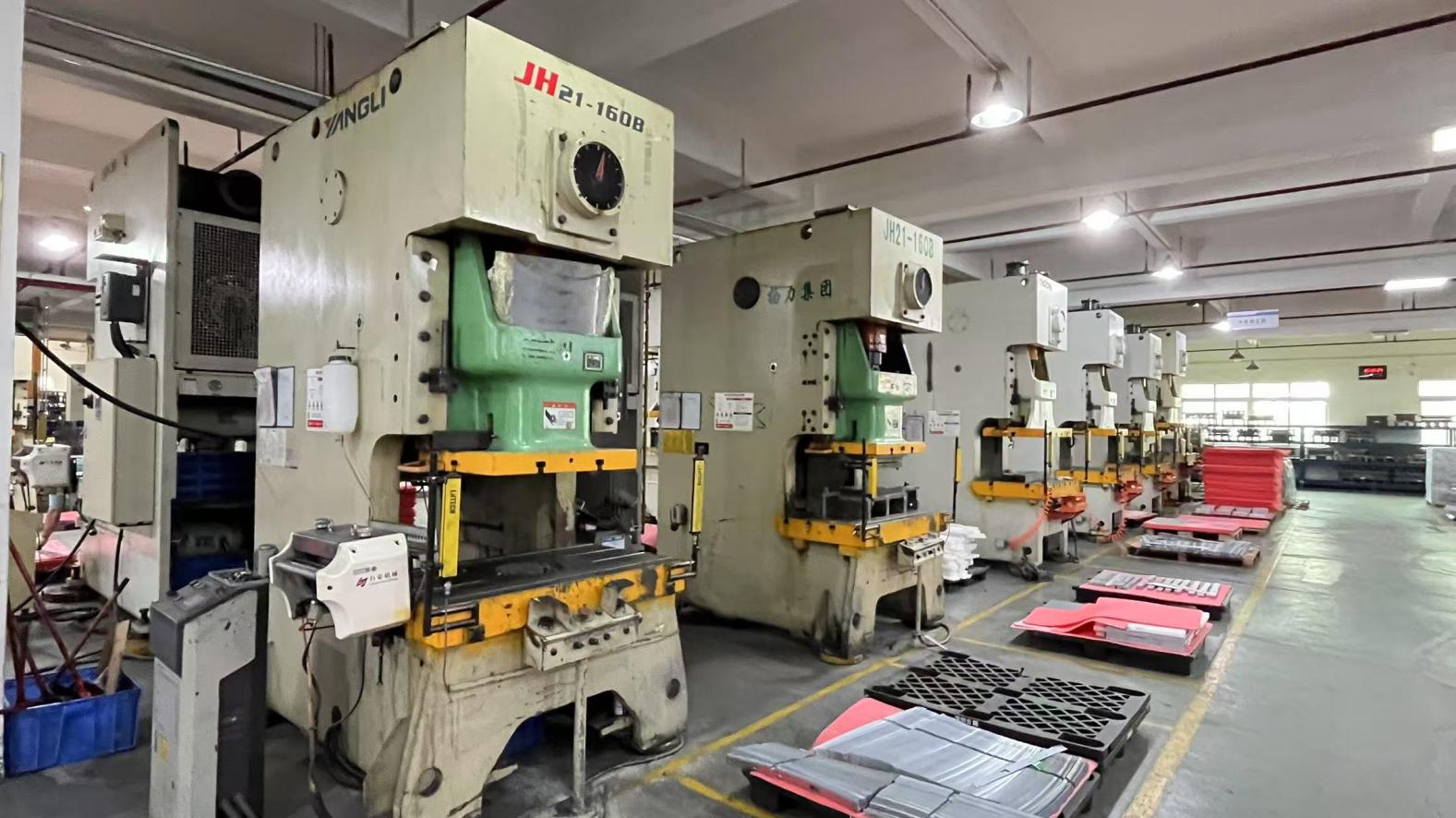
Inside our advanced production facilities. We enforce a 100% pre-shipment quality assurance process to ensure all delivered GPU hardware operates stably under long-term workload stress.




Select from our complete range of certified server architectures. Built for deep learning workloads, scale-out storage systems, and cloud infrastructure deployment.

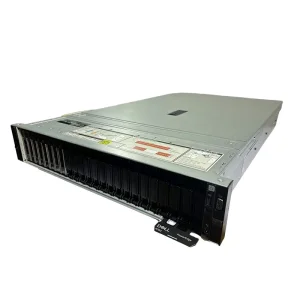
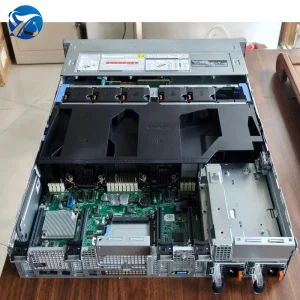
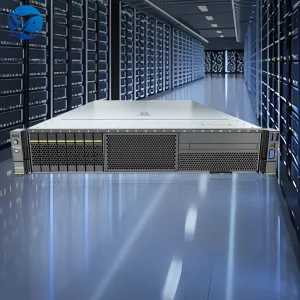
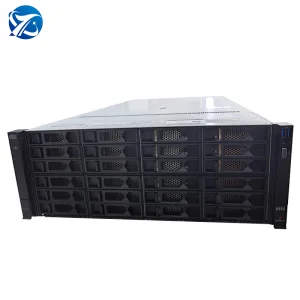
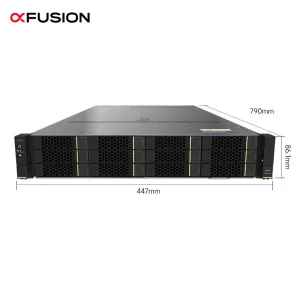
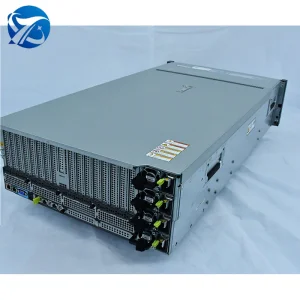
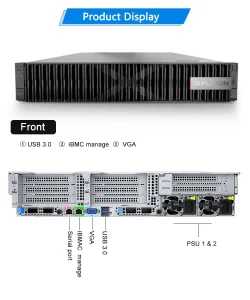

Common questions concerning deployment, importing, thermal tolerances, and customized configurations for buyers in Mexico.
At 2,240m elevation, thin air reduces thermal convection efficiency. We optimize our chassis with high-static pressure fans (up to 38mm thick running at high RPMs) and customize the fan speed curves within the BMC firmware. Additionally, we offer liquid-to-air cooling options for high-TDP accelerators to prevent thermal throttling.
Yes. We work closely with Mexican import agencies to ensure the equipment meets electrical and safety regulations, including NOM-019-SCFI and NOM-001-SCFI guidelines. We can provide standard testing reports to assist your customs broker during border clearance.
By maintaining key components in our Shenzhen warehouse, we can assemble, test, and ship custom configurations in 2 to 4 weeks. Transit times to Mexico via air freight typically take 5 to 7 business days, while ocean freight (destination ports like Manzanillo or Lázaro Cárdenas) ranges from 20 to 25 days.
Yes, we provide full OEM and ODM services. This includes bios branding, custom bezel designs, and specific motherboard selections. Customers can specify memory, network interface card (NIC) brands, and GPU architectures to match existing data center designs in Mexico City.
Every server undergoes a 100% pre-shipment quality protocol. This includes full component visual checks, dynamic IPMI loop validation, high-workload GPU benchmarks, and continuous burn-in testing for at least 48 hours to identify and replace faulty parts before transit.
Contact our system architects today for a hardware configuration quote.
Send Inquiry Now