Veltrixa
Veltrixa
Veltrixa
Explore our high-performance Xeon scalable compute modules, GPU clusters, and enterprise-grade storage configurations optimized for VoIP applications.
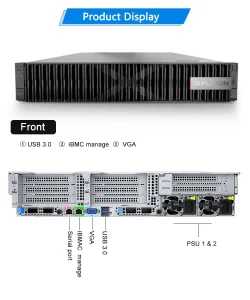

The global telecommunications landscape is undergoing a monumental paradigm shift. As legacy PSTN networks reach obsolescence, modern telecom providers are integrating Unified Communications as a Service (UCaaS) platforms powered by Voice over IP (VoIP) protocols. However, today's carrier-grade VoIP is no longer just about basic call routing. The integration of Artificial Intelligence (AI), deep learning translation models, real-time analytics, and automated voice synthesis demands massive, highly reliable underlying compute power.
At Shenzhen Veltrixa Intelligent Computing Co., Ltd., we sit at the intersection of enterprise telecommunications infrastructure and high-performance computation. By engineering CE-certified computing units, high-density server nodes, and scalable storage configurations, we provide global carriers, system integrators, and large-scale enterprises with the robust, compliant backbones required to execute modern Telecom VoIP applications flawlessly.
Leveraging Xeon scalable multicore architectures to manage real-time session initiation protocol (SIP) and audio transcoding pipelines without packet loss.
Enabling on-premise Deepseek and NLP computing arrays to dynamically interpret, translate, and route call flows via hardware-accelerated GPU pipelines.
All manufacturing practices conform to rigorous CE directives, ensuring electrical safety, electromagnetic compatibility, and operational reliability in mission-critical environments.
How Veltrixa optimizes production efficiency, component sourcing, and compliance standards within the Silicon Valley of Hardware.
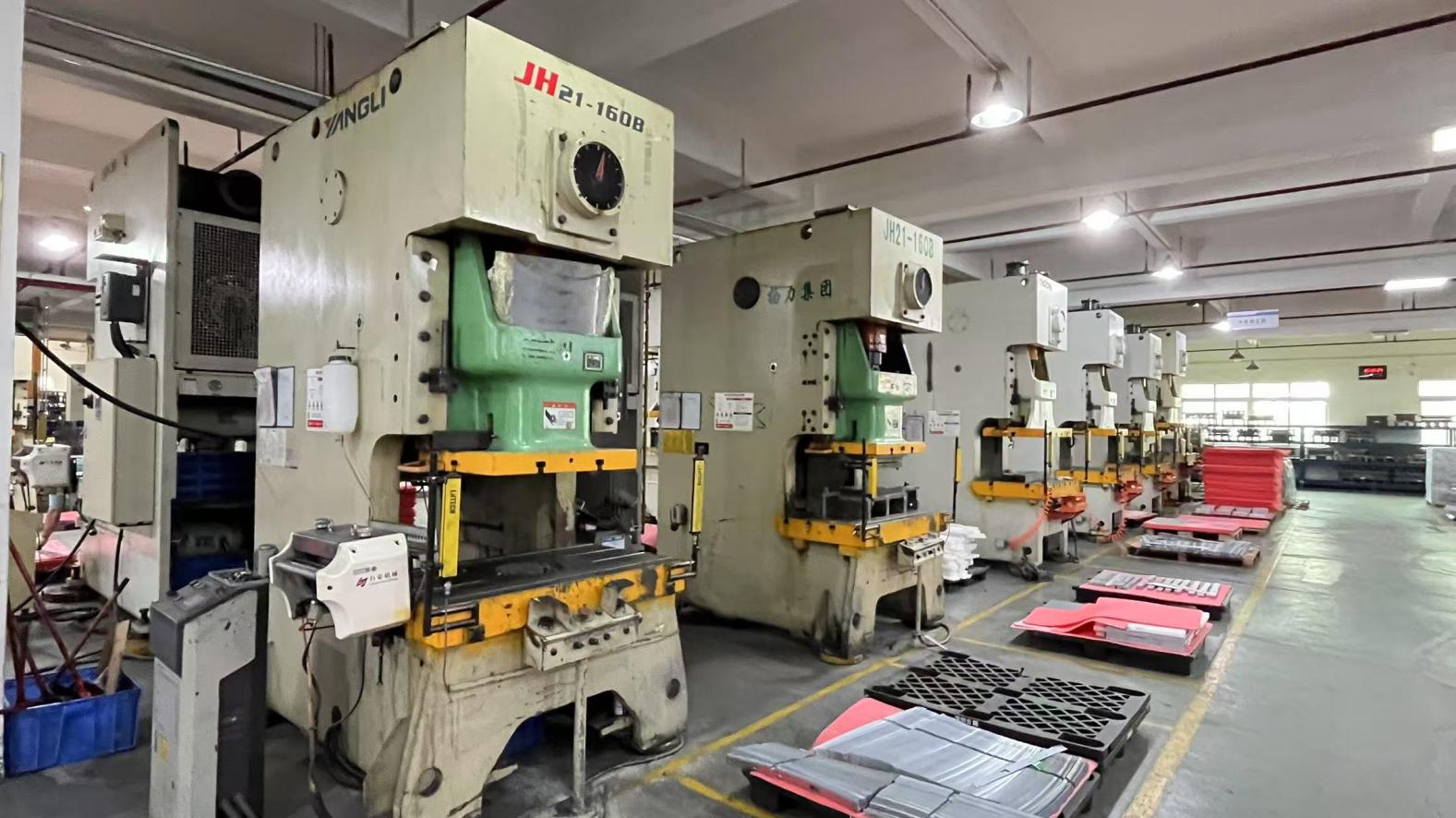
Shenzhen represents the epicenter of global telecommunications and compute-infrastructure manufacturing. By baseplating our operations in this industrial cluster, Veltrixa enjoys hyper-optimized access to downstream silicon fabs, precision PCB component manufacturers, high-frequency connectors, and thermal chassis suppliers. This robust local supply chain dramatically reduces manufacturing lead times, allowing us to implement bespoke configurations for telecom VoIP providers at a fraction of the cost found in western regions.
Furthermore, our 386 m² specialized assembly and testing plant operates under rigorous environmental controls. We conduct extensive thermal stress profiles, high-frequency signal integrity analysis, and full-load burn-in validation on every single server module. Our 46 quality control professionals ensure that the integration of telecom VoIP codecs, network controllers, and processing cores functions smoothly, achieving a zero-packet-drop standard during carrier simulation testing.
The convergence of high-capacity telecom channels, open-source routing, and edge computational AI grids.
VoIP gateways are shifting from passive media processors to active AI hubs. Modern architectures process models like Deepseek on enterprise GPU racks directly adjacent to telecommunication links, permitting instant AI voicebots and low-latency multilingual speech translation.
Traditional hardware PBX is rapidly morphing into containerized, cloud-hosted microservices. Multi-tenant IP PBX installations now execute on enterprise rack servers running virtualization layers, making high core counts and robust DDR5 RAM capacities non-negotiable.
With cybersecurity threats targeting telecommunications pipelines, strict compliance with CE safety standards and the deployment of built-in hardware root-of-trust cryptoprocessors are baseline requirements for enterprise procurement teams.
Understanding how Telecom VoIP hardware integrates seamlessly into modern architectural environments enables IT managers and infrastructure architects to optimize layout topologies, reduce latencies, and minimize overhead costs.
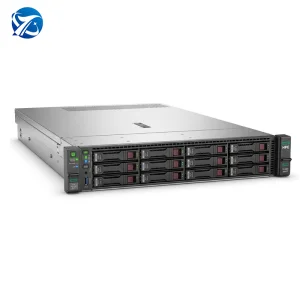
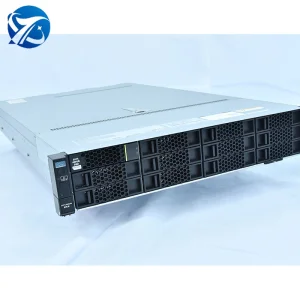
Modern customer support centers demand simultaneous routing of thousands of live voice channels. Underpinning these layouts are dual-socket rack systems (like the xFusion 2288H series or HPE DL360 Gen11) running specialized software-defined telephony applications. These servers transcode raw audio streams between codecs such as G.711, G.729, and Opus, necessitating highly stable memory buses and robust PCI expansion capabilities for high-density interface cards.
Multi-regional conglomerates require a consolidated VoIP infrastructure that replaces decentralized local PSTN services. Deploying enterprise storage arrays (SATA/NVMe high-density storage drives) along with reliable dual-processor computation platforms allows global organizations to execute centralized PBX architectures. This enables unified messaging, voicemail-to-email processing, dynamic call logs, and high-security SIP trunk tunnels across global nodes.
For high-security settings (such as banking systems or public administration networks), processing speech analytics cannot rely on remote public clouds. By employing edge-computing GPU-optimized hardware architectures directly within regional POPs (Points of Presence), call recordings can undergo real-time validation, sentiment classification, and compliance auditing locally, reducing round-trip datalink latencies and mitigating data leakage risks.
In hazardous environments—including mining sectors, chemical refineries, and port terminals—SIP communication arrays must run on localized, fault-tolerant network computers. Veltrixa configurations, combined with custom rack layouts, assure continuous VoIP availability, hot-swappable storage disks for historical logs, and redundant power configurations to ensure zero downtime in high-stakes situations.
Combining virtualization layers, media gateways, and high-compute hardware components for scalable communications.
To design an operational environment capable of hosting carrier-grade SIP routing and interactive voice response (IVR) suites, hardware-software alignment is crucial. Let's explore the typical layout of a modern, macro-level VoIP telecom data center:
Acquiring IT infrastructure on a global scale requires attention to compliance, performance parameters, and logistical structures. For system integrators and IT buyers, validating manufacturers according to clear metrics guarantees a successful deployment.
Ensure the hardware meets safety and electromagnetic compatibility guidelines (such as European Union CE directives). Compliance guarantees lower interference levels with surrounding networking devices and mitigates legal bottlenecks during custom import sequences.
Telecom components operate continuously in 24/7 cycles. Opt for computing systems equipped with variable-speed smart cooling setups, efficient power supply modules (80 Plus Platinum/Titanium), and structured internal layouts to maximize uptime and lower energy overheads.
Choose partners capable of tailoring BIOS splash screens, chassis aesthetics, and default component builds (RAM allocation, storage drives, PCIe card layouts) to fit specific software specifications out of the box.
Enterprise telecom platforms require stable lifecycles. Verify that components (such as DDR4/DDR5 ECC RAM modules, custom GPU mounts, and control boards) are sourced from long-term production pipelines to simplify maintenance and parts replacement over time.
Expert answers addressing hardware configurations, compatibility standards, and procurement specifications.
Explore high-performance interconnects, multi-processor platforms, and reliable ECC memory systems for telecom hubs.

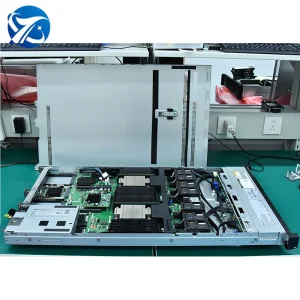
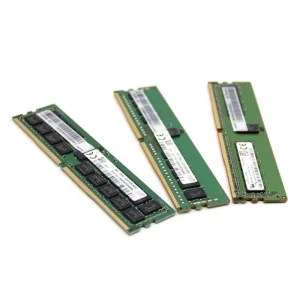

Shenzhen Veltrixa Intelligent Computing Co., Ltd. is a leading manufacturer and solution provider specializing in AI GPU servers, high-performance computing (HPC) platforms, edge AI systems, and customized data center infrastructure. Established in 2017, the company is committed to delivering reliable, scalable, and high-efficiency computing solutions for enterprises, cloud service providers, AI startups, research institutions, and system integrators worldwide.
Located in Shenzhen, China, Veltrixa operates a modern production facility covering 386 m², equipped with advanced assembly, testing, and quality control systems. With a strong focus on innovation and customer satisfaction, we provide flexible OEM and ODM services tailored to diverse computing requirements.
Our infrastructure solutions are deployed globally by a wide range of industries, including:
AI Cloud Service Providers & Data Center Operators.
Network System Integrators and IT consultants.
Research Institutes, Universities, and ML startups.
Enterprise IT Departments & Government Projects.
At Veltrixa, we empower organizations with advanced computing infrastructure that accelerates artificial intelligence innovation, scientific research, and digital transformation. Through continuous innovation, strict quality control, and customer-focused service, we strive to become a trusted global partner in AI computing and data center solutions.